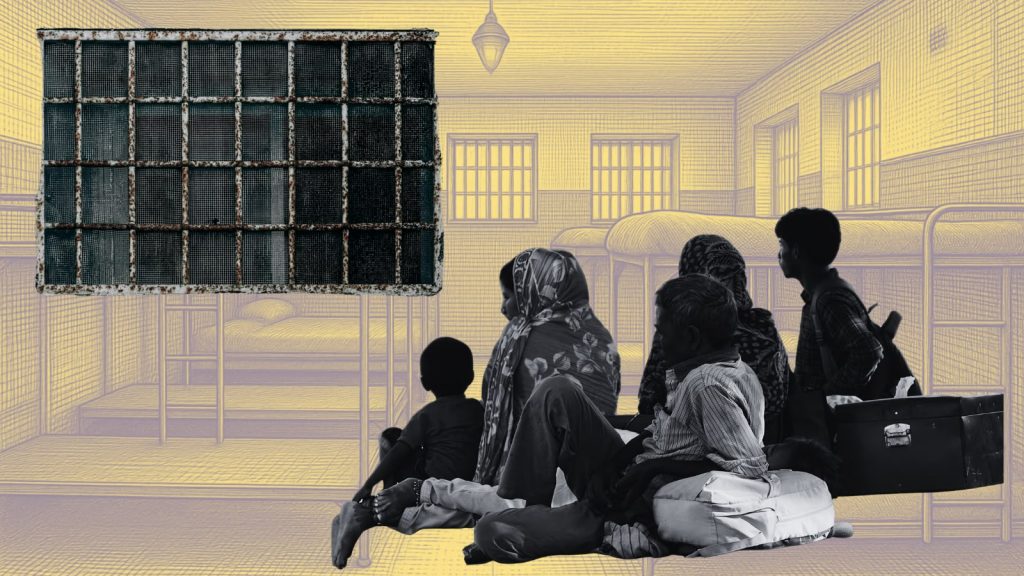



It is 2026, and the media landscape is once again filled with conversations about policy change, deportations, xenophobia and migration-related crises. Yet again, migrants are plunged into conversations that could change their lives, with little to no agency from creators, influencers, or established news institutions, who often turn migration news into viral content aimed at clicks and rage-baiting. These reports often reinforce existing misinformation in the media about migrants and further shape the lives of millions of people worldwide.
I came across a 2025 Telegraph report in which its culture journalist explored his dissatisfaction with the Global Talent Visa and how Nigerian authors and bloggers are obtaining it. The Global Talent Visa is a flexible, multi-year immigration route for talented individuals in science, research, digital technology, or the arts and culture sector to work and live in the UK. The visa allows its recipients to work without employment restrictions, which often leads to faster settlement (Indefinite Leave to Remain).
This Telegraph report made a vague accusation that Nigerian migrants are exploiting the visa system. A niche visa that takes certain processes, with structured evidence that goes through rigorous vetting from the Arts Council England. It also didn’t investigate or provide context for all the reasons it flagged regarding Nigerians obtaining these visas. Rather, the report relied on brief information that doesn’t provide any breakdown, thereby creating a false narrative and stigmatising these groups of migrants.
News of African Migrants Often Has Crisis Framing
The report headline: Hundreds of Nigerian ‘authors’ use visa schemes to enter Britain. The headline welcomes readers with doubt. The journalist uses quotation marks, creating doubt for readers, a loaded editorial choice rather than neutral reporting, implying fraud or deception in the headline without proving it. In the report, the journalist continued to use misleading statistics, citing the percentage of rejections and the acceptance rate without providing context. The journalist pointed out that Nigerians are the largest group of applicants for the Global Talent Visa in the Arts and Culture category, but didn’t bother to dig deeper into why this group of people apply more; maybe the writer might uncover the strong literary culture and the advantage of the English language.
Yet, this writer framed the volume as suspicious rather than structural. The article went on to claim that many of the applicants are not real literary talents; however, there are established processes in place before one can get this visa, vetted by industry experts, and the vetting is meant to select the best talent. This type of article from an established newsroom reinforces the Global South suspicion narrative, and the common pattern we see every day in the media around migration, where African migrants, whether regular or irregular, are reduced to a crisis.
The Reporting Framework Around Migration Needs an Overhaul
In recent times, I have been thinking about news avoidance and why many migrants and minority communities avoid the news. Every conversation I have with migrants and their communities points to one piece of evidence: they’re tired of the bias and misrepresentation.
Reuters’ digital news reports over the past three years have continuously proved it: there is a lack of engagement with news consumption, especially on traditional news sites; many audiences are moving from institutional trust in news to relational trust. When African migrants are constantly portrayed as a crisis in the media, it creates news fatigue; the audience tends to avoid news and rely on platforms where creators are the bearers of news; this doesn’t help either, as misinformation is still rife. If institutions entrusted with news heavily rely on misinformation, rage-bait, and clickbait to sell, what about creators who often don’t care about the ethics of the profession?
Journalism isn’t just about stories; there are laws and ethical standards that guide the art of journalism, and as journalists and editors, we have a moral responsibility to protect the communities we report on, to be fair and just in our reporting. Every utterance, publication or broadcast by a newsroom or journalist has the potential to influence public perception and shape reputations. It is unethical for news professionals not to abide by these ethics; what then makes us different? When journalism ethics like safeguarding individual dignity, avoiding defamation and misinformation, ensuring empirical accuracy, and exercising linguistic restraint to prevent incitement or discord are constantly violated, we are breeding a generation of audiences who don’t believe in our job and feel that the news industry shouldn’t be trusted.
Need for an Alternative Perspective Towards Migration
I have also been thinking about alternative and community media and the importance of the work we do in expanding the narratives of minority groups and communities. When mainstream media focuses on the crisis aspect of migration, community newsrooms with an alternative angle must remind the world of the good aspects of African migration. African migrant communities deserve representation; they deserve more context than the existing stereotypes that have often hounded them. We need to return to the kind of journalism that empowers communities and their people, that is free of bias. A newsroom that centres the community it represents, telling the good and bad stories with both transparency and accountability.