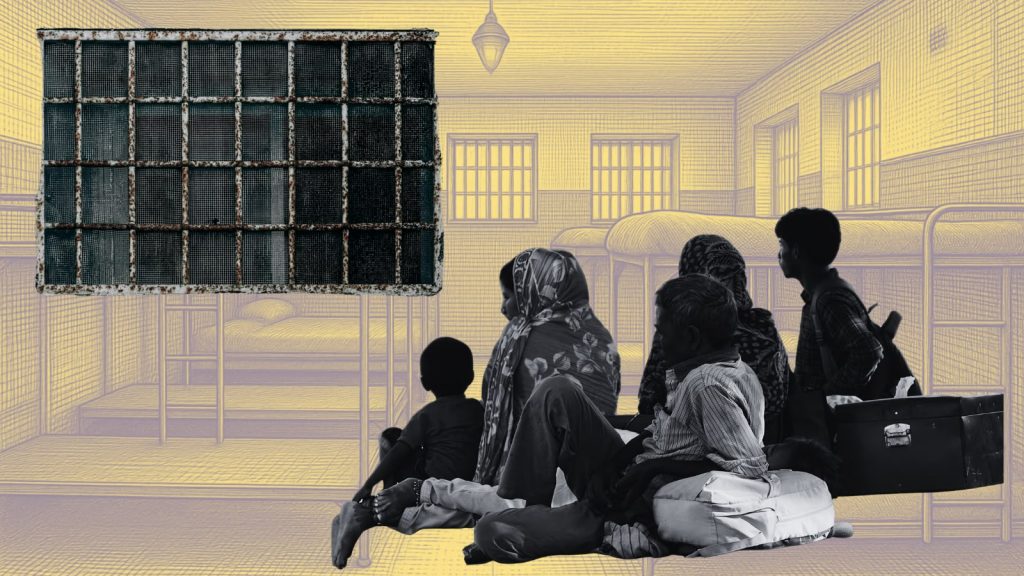


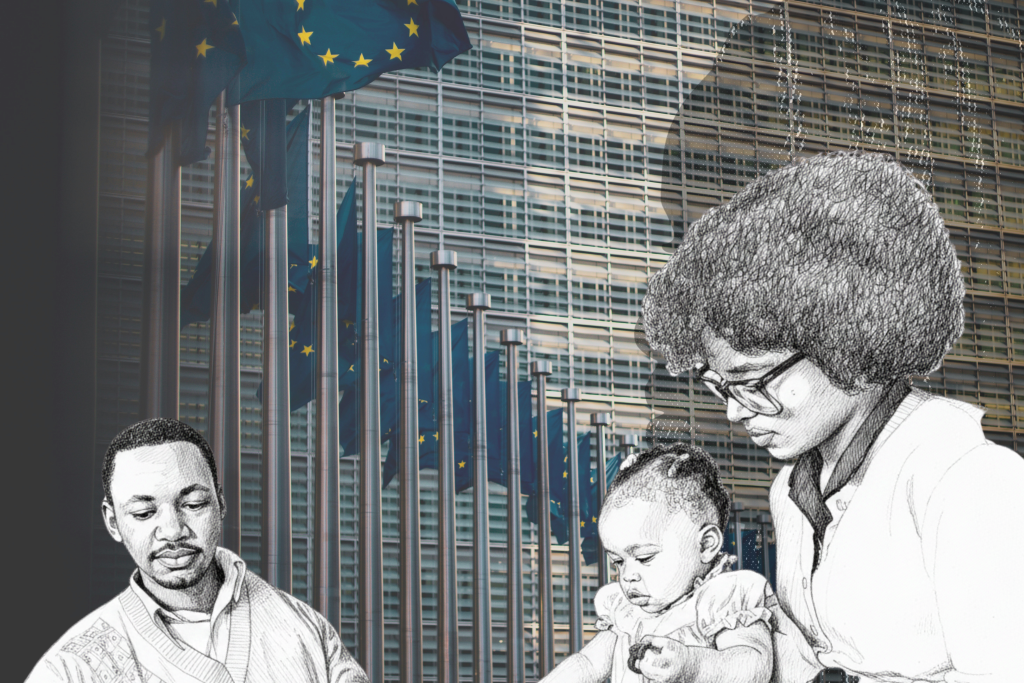
In 2021, the Home Office granted him Pre-Settled Status. In 2023, he moved to the UK with his entire family. In 2024, the same Home Office that granted him legal status informed him that it had made a mistake, and he needed to reconfirm his eligibility or risk losing the legal status on which he built his life. Now, with less than two months before he is rendered undocumented in the UK, he does not know what to do, who to turn to, or what life will become of them after the deadline.
This is the story of Yahya. But Yahya is not alone. He is one of thousands of Black Europeans facing similar status insecurity. They were granted legal status to stay in the UK post-Brexit, but are now receiving notifications from the Home Office stating that their approval was an error and they will soon become unlawful residents.
The first wave of deadlines arrives on the 22nd of July, 2026. Thousands of Black Europeans have, if nothing changes, less than a week to find themselves becoming undocumented in the land that promised them protection and granted them legal status. Yahya is among those whose deadline falls in September 2026. Life has not been the same for most of them since they learned that the legal status they were granted, moved their families for, and built their lives around could be taken back years later by the same authority that approved it.
The Promise That Brought Them to Britain
The EU-UK Withdrawal Agreement was sealed in 2019 and implemented in 2020, as the UK broke away from the EU in the heated Brexit move. That agreement guaranteed that citizens of the EU-27 member states living in the UK could retain their legal status after regularisation, and UK citizens in EU member states could equally choose to stay.
For the UK, the EU Settlement Scheme (EUSS), run by the UK’s Home Office, was promptly introduced. Through the EUSS, EU citizens could apply for Limited Leave in the United Kingdom, also referred to as Pre-Settled Status, a temporary five-year legal status that could be upgraded to permanent Settled Status after those five years were exhausted while living in the UK.
Yahya, Abina, Rashid and other Black Europeans received their Pre-Settled Status approval in 2021. They trusted it, knowing that it came from an authority with no room for careless mistakes. At different times in 2023, they moved their families to the UK.
Some of them did not know that their families also needed Pre-Settled Status to live legally in the UK. After all, the acceptance letter of one affected individual reviewed by Diaspora Africa states plainly that “as a person with pre-settled status under the EU Settlement Scheme, your family members may be able to join or remain with you in the UK under the EU Settlement Scheme. Or you may be able to sponsor a family visa for them.” But they were later informed that their family members also needed Pre-Settled Status.
It was during the process of applying for their family members that they were dramatically informed that even their own approval had been “granted in error.” It would not be extended and would expire on various dates starting from 22 July 2026, depending on when each person’s status was granted.
When Approval Turns to Doubt
Yahya is originally a citizen of the Netherlands. He applied for Pre-Settled Status under the EUSS in May 2021 while still living in the Netherlands. The acceptance letter obtained by Diaspora Africa is clear about this when it states that “If you were outside the UK on the date of your application, you have been granted Limited Leave to Enter. This means that you have a secure status under UK law.” A community leader managed the application process on his behalf because he did not quite understand the complexity of UK immigration law. Following the Home Office’s assessment, he was granted Pre-Settled Status in August 2021.
Relying on the provisions of the scheme, Yahya’s family members joined him in the UK in July 2023, and applications for their Pre-Settled Status were submitted. In September 2023, Yahya’s youngest child, Mohammad, was granted Pre-Settled Status, but nothing was granted to his two other children and his wife. After a prolonged period of waiting, Yahya checked their status online and was shocked to discover that his wife was rejected and the children were still waiting, as no decision had been made.
The situation became worse when Yahya received notification that both his Pre-Settled Status and that of his youngest child could be curtailed in September 2026 if they failed to provide more evidence the Home Office required. That is almost three years after Yahya was granted Pre-Settled Status and had already established his life in the UK using the same documents approved by the same Home Office that now told him were not sufficient.
For Yahya, life has become extremely tough after learning about this retrogression. The UK has already become home to his children. He works, his wife works, his children go to school, but they are now expected to leave everything and exit.
“Honestly, I found myself in a state of uncertainty. I am still trying to understand the situation. I am confused about what to do, and I still don’t see the solution,” Yahya told Diaspora Africa.
“What worries me the most is actually the status of my family after being moved to the UK, my wife and my two children who are waiting,” he added.
Yahya is not the only one carrying this weight. His wife is equally devastated.
“She is aware of what is going on, and she is really disturbed. She always asks me what we should do now that the deadline is approaching and what the way out is,” Yahya said.
His children, too, are terrified.
“They are aware, and they are terrified about it, because here they have settled in schools and they relate to other children. They forgot almost everything about the Netherlands. In fact, they forgot the Dutch language. They now speak only English, and they wouldn’t want to go back to the Netherlands,” he said.
Not an Isolated Case
Yahya’s ordeal resembles Abina’s, which is why this is a pattern rather than an isolated event. Unlike Yahya, Abina lived in the UK pre-Brexit. She submitted her Pre-Settled Status application in May 2021 and was granted it in July 2021. In the same manner as Yahya, Abina trusted the Home Office and relocated her entire family to the UK, including four children under 18, in 2023.
She initially did not know that her children also needed to have Pre-Settled Status. After she was informed in 2024, Abina submitted her children’s application in January of the same year. As with Yahya, her children’s applications also prompted the Home Office to review her own status, and she was asked to provide more evidence of her eligibility. Even after she did so, the Home Office informed her in April 2024 that, based on the information she provided, they found that the Pre-Settled Status she was given in 2021 was “granted in error” and would not be extended when it expired on 22 July 2026. Her children’s applications were already refused in February 2024.
The situation is taking a toll on Abina and her children. Her three children go to school, but her eldest daughter, Sila, was denied access to the university, which has seriously affected her mental health. For Abina’s family, this is the reward for the trust they placed in the Home Office and the Withdrawal Agreement that promised them protection and guaranteed legal status in the UK.
Rashid’s case is not much different. He applied for Pre-Settled Status in 2021, and was granted it in August of the same year. He also had his family join him in the UK in August 2023. Rashid submitted fresh applications on their behalf not long after they had joined him. As with the rest of the affected individuals, his family members’ applications triggered a review of his own status, and he was informed that his status was granted in error and would expire in September 2026.
Documents and notifications reviewed by Diaspora Africa, together with a scrutiny of the nuances of each person’s case, point to the existence of a clear sequence: approval, life built, review, reversal. On that note, an investigation by Black Europeans, a rights advocacy group, found that many families are facing difficult situations but are reluctant to come forward despite what they are going through. This is because, according to them, applying for family members often triggers a review of the EU sponsor’s application, which results in their Pre-Settled Status not being upgraded. Without any alternative, they are scared to speak out.
Diaspora Africa made repeated attempts to obtain the Home Office’s response to the issues raised in this report. Efforts to reach the department through publicly available contact channels were unsuccessful. Calls to the listed telephone number did not connect, and messages sent via an official instant messaging contact were not delivered. Consequently, the Home Office had not responded by the time this report was published.
The System Behind the Stories
The pattern is not random. The Independent Monitoring Authority found that 35% of EU and EEA citizens surveyed feel they have experienced discrimination by public bodies since Brexit. Around half identified as from racialised backgrounds. Research commissioned by the EU Delegation warns that some lawful residents could face outcomes “analogous to the Windrush scandal,” the UK’s previous deportation of Caribbean citizens who were invited to the UK and had lived legally for decades.
There is a limited right to appeal. The burden falls on the applicant to prove they should not have been approved in the first place.
“I met one lawyer in Liverpool, and I paid him for the appeal, but even after several communications with the Home Office, still nothing changed,” Yahya told Diaspora Africa.
“They gave me about 21 days, and that time I was always in the lawyer’s office. We submitted more documents, but the Home Office still refused, saying that the documents aren’t sufficient,” he added.
Yahya believes the timing of the Home Office’s reversal is the real injustice.
“It is very unfair to grant me status, and after I brought my entire family and established my life here with my children going to school, I am now being told that a mistake was made. I feel really bad about it,” he said.
The briefing by Black Europeans, shared with Diaspora Africa, estimates that up to 800,000 EU citizens from minority backgrounds may be affected by status insecurity. They lose the right to work, rent, access the NHS, and send their children to university. The Home Office has not published data on how many Pre-Settled Status grants have been reviewed or declared erroneous.
What Comes Next
The situation is not beyond repair; others can be saved from reaping what they did not sow by a system that promised them protection. To restore fairness and confidence in its own process, the Home Office could halt the reviews for the time being and grant Settled Status to those already affected. Short of that, the forthcoming deadline could be extended for those affected until the results of investigations by independent bodies are complete and presented. The Home Office can also create more transparent and practical pathways for resolving disputed cases.
The Independent Monitoring Authority, in its independent capacity, can investigate the pattern directly and recommend the best way forward. EU Member States, on their part, can pressure the UK through the Withdrawal Agreement’s joint committee to look into the matter and ensure fairness and equal treatment. The European Diaspora Anti-racism Taskforce, established by Black Europeans, is coordinating outreach and safeguarding. But without urgent intervention, the 22 July, 1 September, and subsequent expiry dates will come and pass, and thousands will fall into undocumented status through no fault of their own.
Waiting for a Decision
The July deadline is not the end of this crisis. It is the beginning. For those whose expiry dates fall in September, October, and the months after, the same uncertainty will play out with the same consequences. The system that granted them legal status, let them build lives, and then reversed its decision will continue to operate unless those with the power to intervene choose to act. Whether any of them will do so before more families are plunged into devastating uncertainty remains an open question.
Asked what he would say directly to the UK policymakers, Yahya did not hesitate. “I want them not to revoke my visa. They should help me and my family get the right settled status in the UK.”
He hopes the decision will be reversed before it is too late. “I wish the decision would be reversed and they help us. That is why I was very happy when I was informed that you were going to interview me. Anything that can help me in this situation, I welcome it.”
And what does he hope readers take from his story? “I hope people will understand the difficult situation we found ourselves in, and help us through any means to get fair treatment and the right visa for us and our family.”
The UK promised they could stay when sealing the EU Withdrawal Agreement. In a few days, and in the weeks to come, Yahya and thousands like him facing the same status insecurity will know their fate. The promise made six years back is about to be broken.
Writers:       Isah Madachi, Amaka Obioji
Editor:        Beatrice Nwoko
Cover image:   Diaspora Africa