
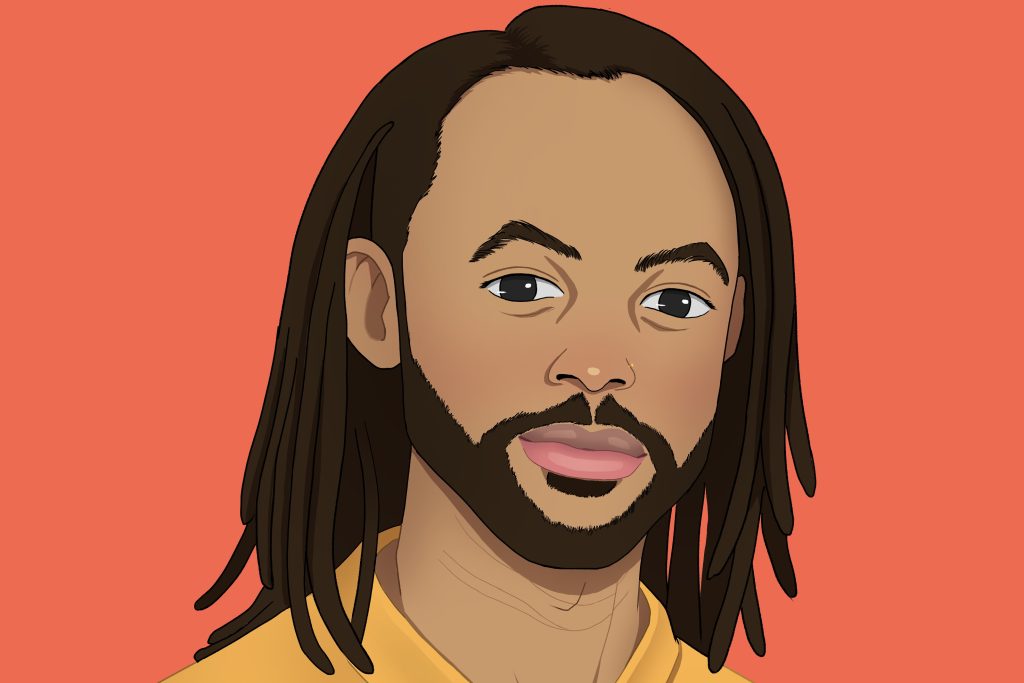
Jamel Buhari is an Amsterdam-based Dutch-Ghanaian researcher and community organizer. He is currently finalizing his PhD at Leiden University, where his research focuses on the lived experiences of queer African migrants in the Netherlands. His work examines how queer Africans navigate the Dutch social and institutional landscape, negotiate questions of belonging and construct their identities. From a historical perspective, he explores how migrants’ self-narratives intersect with broader hegemonic discourses in media, politics, and NGO spaces. His research also critically engages with the Dutch national self-image and global reputation, particularly the framing of LGBTQI+ rights as a core element of Dutch national identity. In collaboration with Obodo Nigeria, Jamel also started the African Queer Mobility Month, a series of creative participant-led workshops, exploring how queer people move, resist, create and belong in the face of anti-queer and anti-trans hostility.
Chimee Adịọha: I will start this chat with my interest on your critique of the IND (Immigration and Naturalisation Service) especially how it functions in terms of queer migration. You strongly critique the IND procedure for categorizing asylum applicants into a singular narrative. As someone with a rhetoric background, I am continuously thinking about the influence of these biased institutional frameworks on the kinds of stories queer migrants feel compelled to tell.
Jamel Buhari: I think many queer individuals who go through the asylum process feel that they need to fit their stories and identities into narrow frames that are understood by those who have the power to decide who is granted refugee status and who is not. Several of my respondents shared how they come from contexts where they were perhaps not used to speaking openly or in detail about their sexuality or gender identity, (or about any other topics considered sensitive) especially not in interactions with authorities. Some describe how in a European asylum context they are suddenly expected to speak in great detail about something they may have spent a lifetime actively concealing or at least had to navigate very carefully.
What I have generally seen in my research is that there are some people who really know the “rules of the game”. With that I mean those who are more familiar with hegemonic sexual and gender categories, and who perhaps through their educational or professional backgrounds are more used to articulating their experiences/identity in ways that would be understood within such institutional settings. At the same time, I have seen how much harder this process can be for individuals who do not have this same advantage, particularly those who for example might be less familiar with the global language around sexual and gender identities. I remember queer African community organizers in the Netherlands sharing how they sometimes meet community members who for example do not know what the acronym LGBTQ+ means. You can only imagine how difficult it then becomes to tell a story that would be considered “credible” within a system that often assumes familiarity with exactly these kinds of identity categories and vocabularies, while holding little space for non-Western or indigenous understandings of gender and sexuality.
Chimee Adịọha: Your work reveals that queer migrants often rely on transnational queer networks rather than traditional diaspora or family networks. This is striking and true, in a way that I have just started realizing it in the spaces that I am familiar with, especially as someone who has moved between cities and countries. I also understand this happens out of a resistance to homophobia. But on the other side, in a contemporary sense, I would like to ask if you think digital technology is also contributing to how queer mobility is reshaped or how mobility and decision making is reshaped.
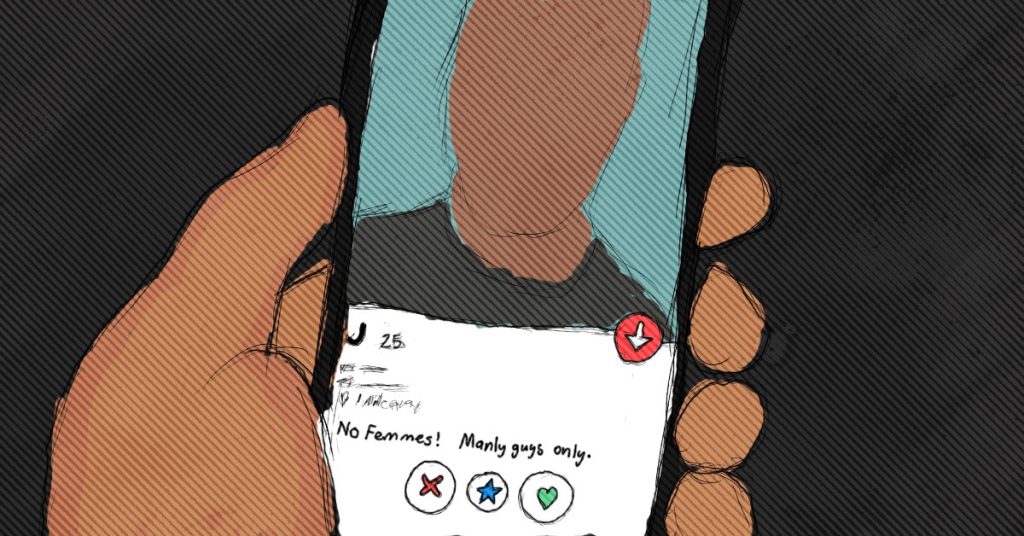
Jamel Buhari: Yes, definitely. Developments in digital technologies have contributed to the emergence of new globalised networks, while also changing the nature of these networks. Networks have always played an important role in migration, shaping where and how people move and influencing people’s migration trajectories. But digital technologies have really transformed how these connections are formed and maintained. For queer individuals in particular, these developments can be very important. Digital spaces allow people to find and connect with each other, especially in contexts where there are fewer offline spaces to meet, which can also be the case in countries where there are higher levels of criminalisation. Through these technologies, people are able to access transnational networks that also shape how people think about mobility and possible destinations. I also see how digital technologies play an important role in the quest for community and belonging, particularly in places of settlement. I like the work of Dr. Godfried Asante, who has written about queer Africans in the US and the role of virtual communities. He shows how queer African migrants use online platforms to find community and construct their identities in a US context, expressing themselves online in ways that they perhaps could not in their offline environments.[1]I also recognize similar dynamics in the communities I have worked with in the Netherlands. One example is Rainbow Anonymous, a queer African organization that was founded during Covid-19. It initially started as a Whatsapp group for queer Africans in the Netherlands, and later grew into a broader offline community that now continues to organize both online and in-person meetings. A lot of queer African migrants join such communities as they are experiencing alienation and exclusion from predominantly white Dutch communities (including white Dutch-led mainstream LGBTQI+ communities/organizations), while also at times facing exclusion from larger African diaspora communities living in the Netherlands, communities that are often perceived by my respondents as predominantly heteronormative and homophobic.
So yes, I do see how digital technologies shape queer individuals’ mobility and migration trajectories, but also how they function as important platforms that people use at different stages of their migration journey, whether that is to find community, shape their identities, or to generally navigate life in a new society as a newly arrived migrant.
Chimee Adịọha: You’ve observed that migrants of colour can face racism and exclusion within predominantly white queer spaces in Europe. I also think this is where we need to have a balance in terms of regarding Europe as mostly a safe haven for queer people. The reality that queer migrants move out of a homophobic state to face another version of discrimination disrupts the narrative of Europe as an uncomplicated site for queer freedom. How do you think we can we wrestle with this dilemma?
Jamel Buhari: Yes, some scholars have described how queer migration is frequently framed in Western contexts as a linear movement from the ‘Global South’ to the ‘Global North,’ simplistically imagined as moving from total oppression to full liberation.[2]In my research, I also disrupt such discourses. I show the multiple forms of marginalization queer migrants of color in the Netherlands are exposed to, facing an intersection of homophobia, racism and other kinds of discrimination. In particular, when it comes to the African continent, there is a dominant image in Western representations of Africa as an inherently homophobic continent, so queer movements from this region would follow this rather simplistic liberatory script (moving from oppression to freedom). This narrative is visible in for example Western media and sometimes also reproduced by LGBTQI+ organizations. In reality we see how queer mobility is much more complex and nuanced.
To answer your question of how to wrestle with this dilemma, I think it is important to highlight the work of queer of color organizations, who have for decades been dealing with questions of how to navigate these intersectional identities in a Dutch context. For some historical context, the Netherlands has a relatively long history of queer of color organizing. Since the 1980s, Dutch Black queer groups such as Sister Outsider, Strange Fruit, and Suho (Surinamese gay movement) addressed intersections of racism and homophobia in the Netherlands, shedding light on experiences that often remained invisible within broader queer or mainstream Dutch spaces.
Chimee Adioha: Through your work, I am noticing how asylum systems test queer applicants against Eurocentric expectations of what queerness is or what queerness should look like. Sometimes this is unintentional, honestly I am not sure of its intentionality. But there is a friction around the conversation on whose understanding of gender and sexuality now becomes the standard to follow. And what forms of queerness are now flattened? These questions become crucial for the understanding of global queer migration, and a great thing that you are working on these.
Jamel Buhari: I think globally, Eurocentric understandings of gender and sexuality have become dominant, largely as a result of globalisation and also as a colonial legacy. This has disrupted the large diversity in gender and sexual understandings that have historically existed, especially in many non-Western contexts.
In asylum contexts, it is often these hegemonic Western understandings of gender and sexuality that become the dominant reference point, leading to the rich diversity in sexual and gender identities and expressions being flattened or misunderstood. In these contexts, applicants might identify in ways that are not fully reflected in Western identity categories, which is another barrier when dealing with authorities that are guided by a Western-centric reference point.
Chimee Adịọha: Also you significantly focus on intra-African queer migration to places like South Africa and Kenya, and to major cities within countries. My curiosity is about visibility. Yes, these movements are regional and internal, but so often obscured in European discourse. I use Europe because that is where your work intersects with.
Jamel Buhari: Yes, these movements are indeed often overlooked, particularly in European discourses on migration. It also falls in line with what I mentioned earlier; intra-African forms of mobility disrupting the dominant Global South–Global North trajectory through which (queer) migration is often imagined in Western contexts. As with migration more broadly, the largest part of queer African mobility takes place within the continent itself, within countries and regionally. People may, for example, move to particular cities where they are more likely to find community, anonymity or relatively safer spaces. While countries like South Africa and Kenya are often mentioned in this regard, there are also many other, sometimes less visible or perhaps more unexpected queer mobility trajectories taking place across the continent. The publication “Queer and Trans African Mobilities: Migration, Asylum and Diaspora” by B Camminga and John Marnell touched upon African queer mobilities within the continent.[3]
I think that as much as it is important to document the rise and danger of anti-LGBTQI+ politics in different African contexts, it is equally important to highlight voices of resistance. I very much admire the work of queer communities across the continent, who are actively fighting oppressive forces by creating safer spaces, even within contexts of heightened stigmatization. It is crucial to not only focus on trauma and suffering, but to also make space for stories of resilience and queer joy.
Chimee Adịọha: One of the major reasons I am excited for this chat is also so that we get to use these ideas as a companion for media organizations and institutions that are mostly African led, also seeing your work use narrative methodologies and oral history, what can they adopt or what practices can they engage with when it comes to reporting queer migration that can seriously resist victimisation and simplification?
Jamel Buahari: I think when it comes to reporting on queer migration, it’s crucial to work closely with the communities you’re writing about, while centering the voices of those with lived migration experiences. These personal narratives, as I also see in my research, are complex and layered, and often cannot be reduced to a single story of victimhood.
It’s also really important to situate these stories within a broader historical and social context. To understand a person’s narrative, you need to see the bigger picture, for example, how anti-LGBTQI+ politics, colonial legacies, and migration policies have shaped someone’s experiences, both in their countries of origin and where they are now.
More broadly, especially as we’re seeing rising political repression of queerness, we also need to shed light on the longer history of queer communities and resistance (also on the African continent). Anti-queer forces often try to erase these histories, claiming they never existed or are somehow a novelty, or “unAfrican.” This makes it more important than ever to document both the present and the past, showing the rich diversity of gender and sexualities across Africa.
I also think media organisations can play an important role by not only documenting struggle, but also making space for stories of resilience, community and queer joy. Platforms like yours (which already does this wonderfully) can continue to do this by highlighting diverse and complex lived realities, providing space for the many voices of queer resistance, both today and historically.
[1] See: Godfried Asante, “‘Where is home?’ Negotiating comm(unity) and un/belonging among queer African migrants on Facebook” in: Camminga, B, en John Marnell ed., Queer and trans African mobilities : migration, asylum and diaspora (London, England: Zed Books 2021)
[2] See: Florent Chossiere, ‘Debunking the liberation narrative: Rethinking queer migration and asylum to France’, in: B. Camminga and John Marnell (ed.), Queer & Trans African Mobilities (London 2022).
[3] Camminga, B, en John Marnell, Queer and trans African mobilities : migration, asylum and diaspora (London: 2022)
This conversation was conducted, edited, and prepared for publication by Chimee Adịọha for Diaspora Africa, as part of its ongoing coverage of migration, identity, and global belonging.