

As governments harden borders and public debate reduces migrants to statistics and slogans, a new theatrical work insists on something radical — their humanity.
In the spring of 2023, a boat capsized off the coast of Greece carrying more than 700 people. It was one of the deadliest Mediterranean shipwrecks in years. Within days, the news cycle had moved on. The dead were counted, catalogued, and largely forgotten — reduced, as so often happens, to a number in a recurring tragedy that the world has grown dangerously accustomed to.
This is the silence that Between Two Worlds refuses to accept.
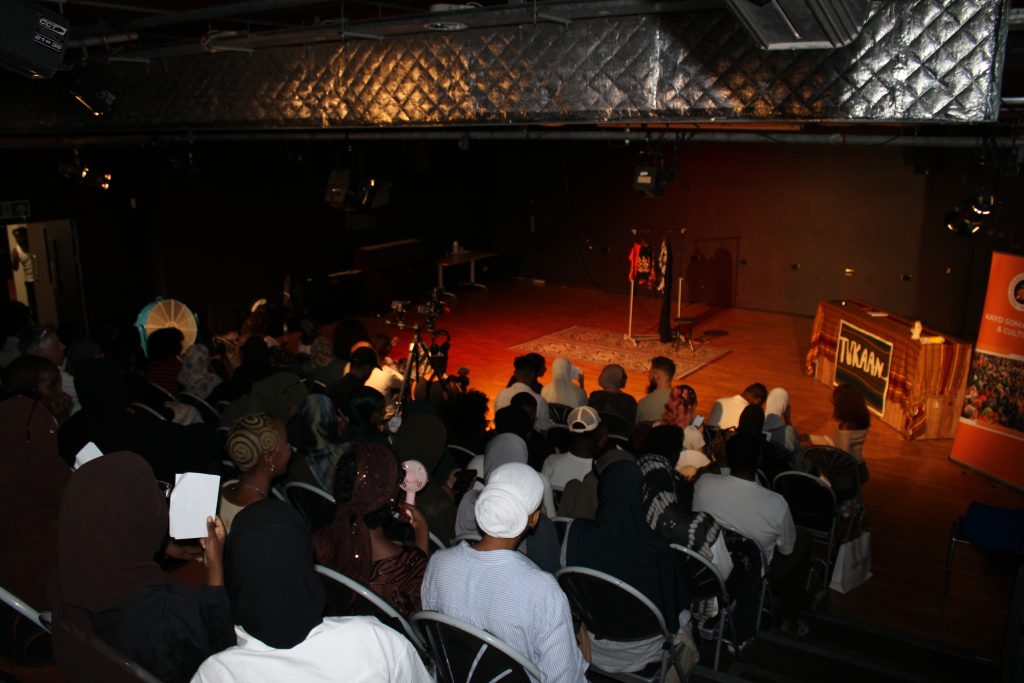
The play, which I wrote after years of travelling across more than 30 countries documenting Somali communities and witnessing first-hand the journeys people take to reach safety and dignity, follows one Somali man’s passage to London along the deadly land and sea routes that thousands attempt each year. It is not a comfortable watch. It is not meant to be. But it is, I hope, an honest one.
A Crisis Reduced to Clichés
The language we use to talk about migration has become a political weapon. In British public discourse in particular, the word ‘migrant’ has been steadily weaponised — detached from context, stripped of biography, and deployed as a shorthand for threat. Government ministers speak of ‘stopping the boats’ as though the boats themselves are the problem, rather than the desperation that fills them. Newspapers run front pages that could have been lifted from a different era of European politics.
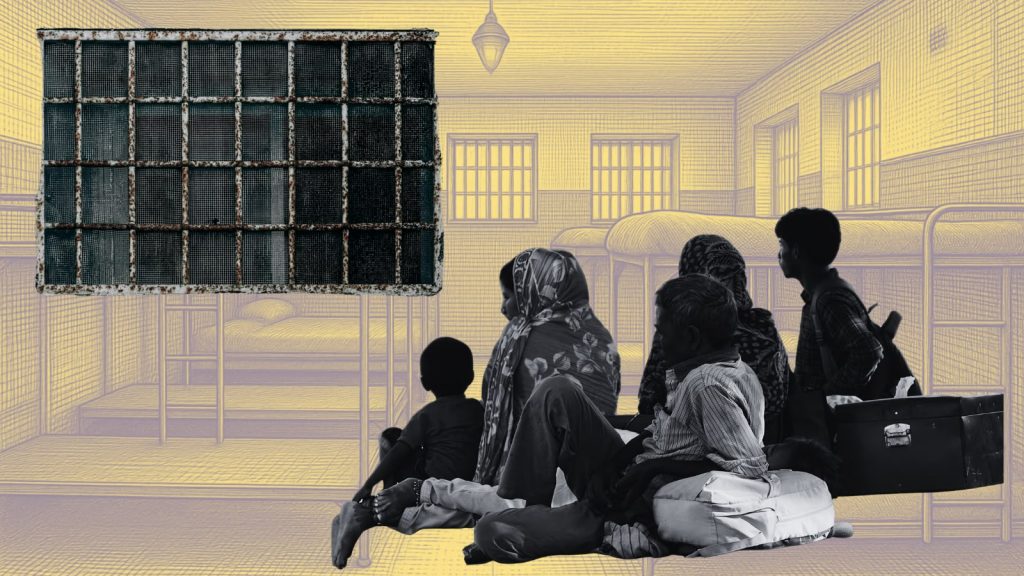
Meanwhile, the lived reality of those making these journeys — the calculations made in the dark, the families left behind, the weeks spent in makeshift camps, the moments when the sea becomes the only option left — remains almost entirely absent from mainstream conversation.
Theatre cannot fix a broken asylum system. It cannot pass legislation or reverse a hostile environment policy. But it can do something that statistics and op-eds rarely manage: it can make an audience sit with another person’s experience long enough to feel it.
‘On stage, a refugee is not a number in a briefing document. They are a person in a spotlight, and you are required to look.’
Memory as the Only Luggage
One of the things I kept returning to while writing the play was the question of what people carry when they have nothing left. The answer, again and again, was memory. Songs their mothers sang. The specific smell of a city they may never return to. The name of a street. A recipe. A joke that only makes sense in a language the host country does not speak.
These fragments of home are not sentimental details — they are the architecture of identity. And when everything material has been lost, they become both a lifeline and a source of grief. Between Two Worlds tries to hold both truths at once: that memory sustains people in exile, and that it can also make the distance feel unbearable.
This is something that migration coverage almost never captures. The story, as it is usually told, begins at the border and ends with either acceptance or rejection. What happens inside a person — the layered, ongoing work of carrying a whole self through an indifferent or hostile world — is treated as background noise, if it is treated at all.
The Politics of Belonging
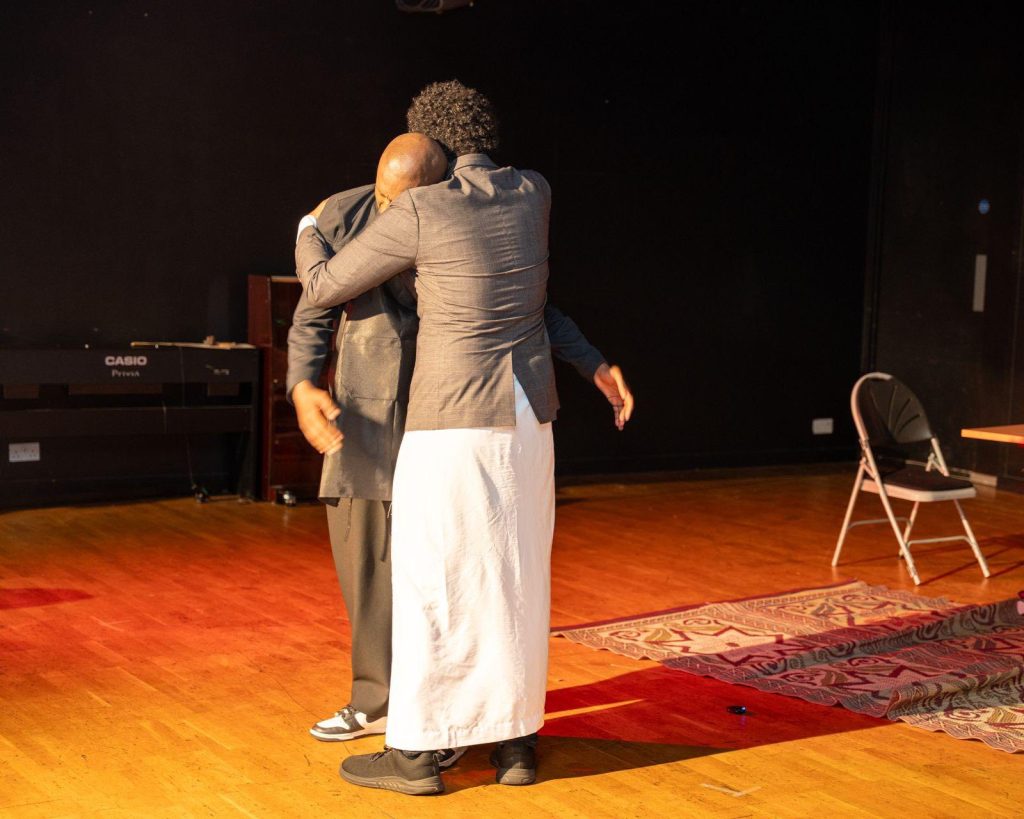
The title of the play is deliberate. Between Two Worlds is not a temporary condition that ends when someone receives leave to remain. For many people in the Somali diaspora — and across displaced communities more broadly — it is a permanent state of navigation. You are expected to integrate, but integration is rarely offered on equal terms. You are told to call this place home, but home is a concept that has been complicated beyond easy repair.
What the play tries to dramatise is not victimhood but agency — the constant, exhausting, and often invisible work of people who refuse to be defined solely by their displacement. The central character is not a symbol. He is a man with desires, contradictions, humour, and grief. He makes bad decisions and wise ones. He loves people and loses them. He is, in other words, a human being — which should not feel like a radical statement, but in the current political climate, increasingly does.
Why This Story, Why Now
I have been documenting Somali communities for years — through journalism, photography, and now theatre. What I have found, consistently, is that the gap between how these communities are represented and how they actually live is vast. The stories that reach mainstream audiences tend to be stories of crisis: war, famine, displacement, danger. The stories of culture, creativity, intellectual life, humour, and love — the full texture of a people — rarely make it through.
Between Two Worlds is my attempt to close some of that gap. It is a play about one man’s journey, but it is also about the journey of a community — and about the kind of political and media environment that decides, every day, whether that community is seen as a problem to be managed or a people to be heard.
As the Mediterranean continues to claim lives, and as the rhetoric around immigration grows crueller and more detached from reality, I think that distinction matters more than ever.
Theatre will not stop the boats. But it might, for an hour or two, make us remember why it matters that we try.
Writer:  Mohamed Mohamud
Editors: Amaka Obioji, Chimee Adịọha
Images:  Mohamed Mohamud