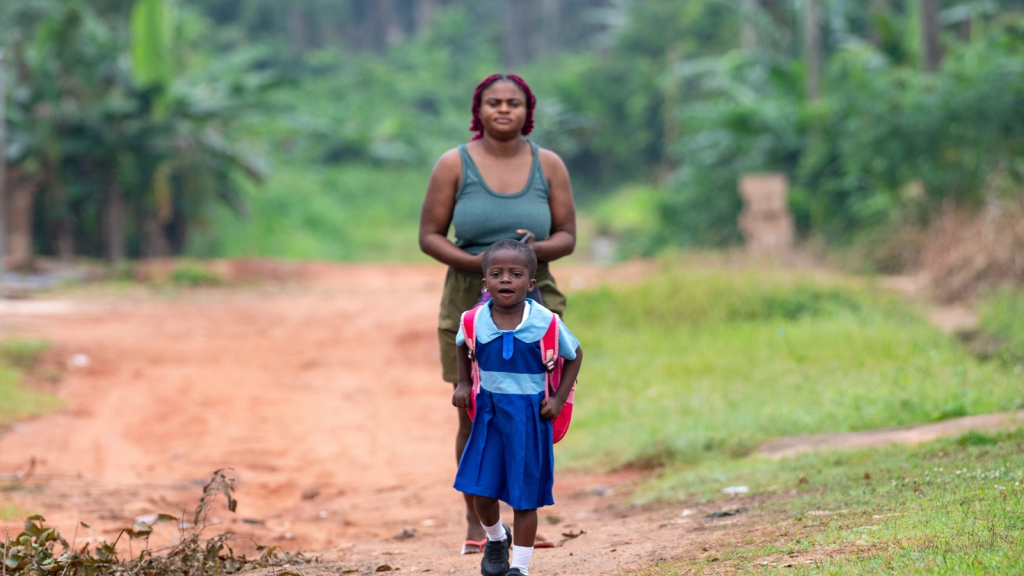

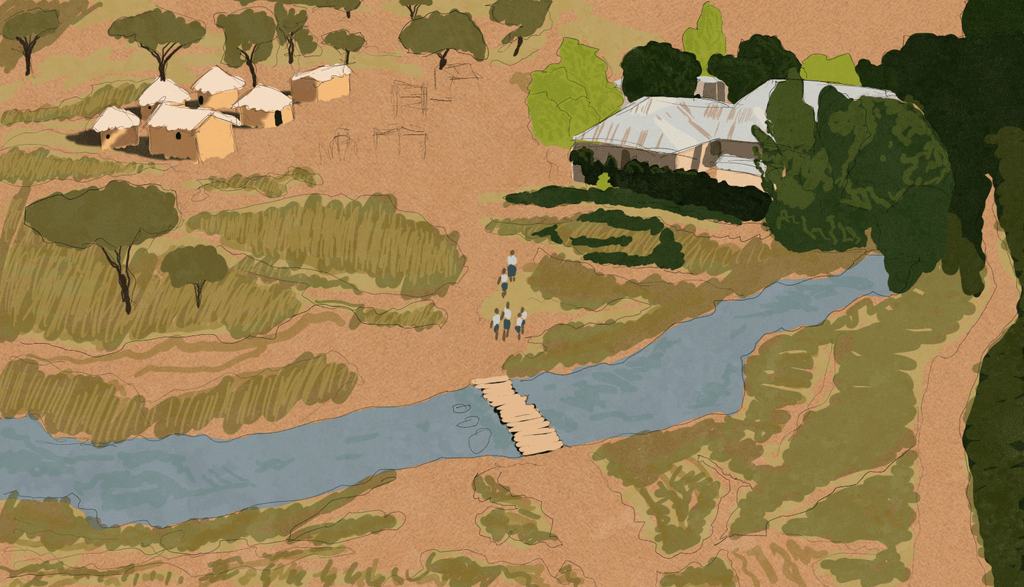
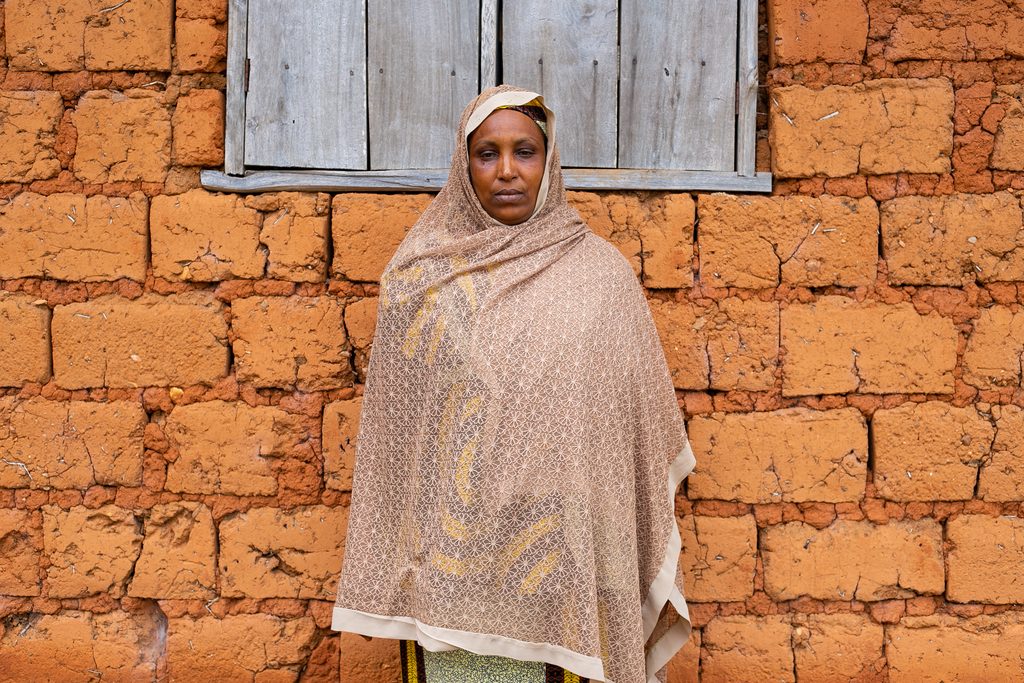
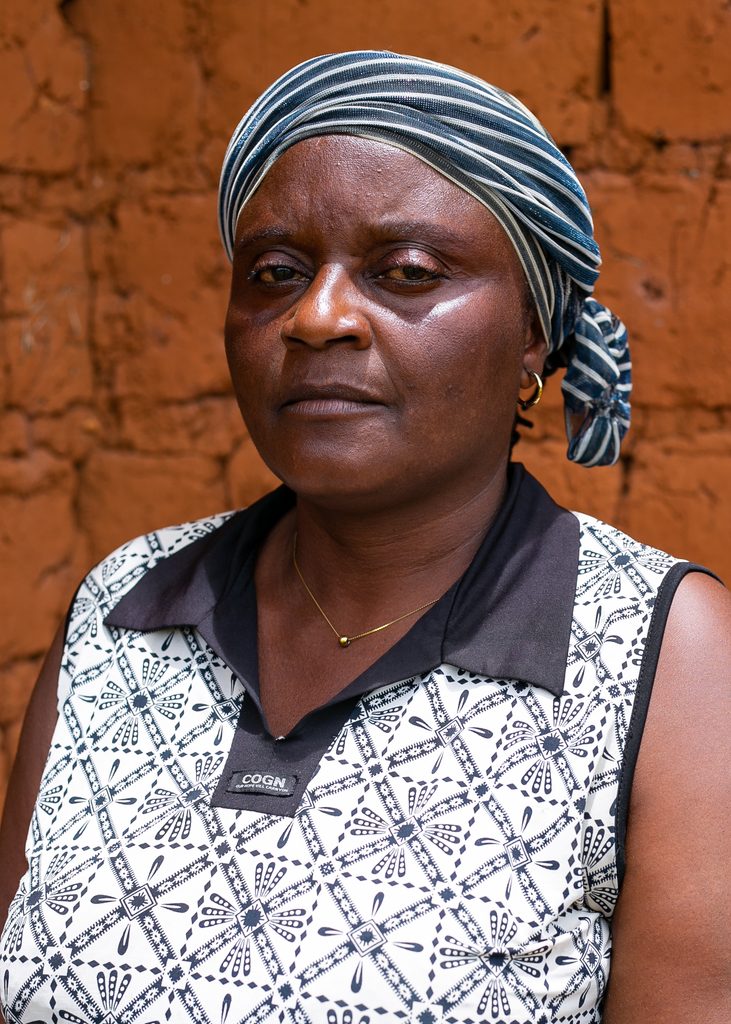
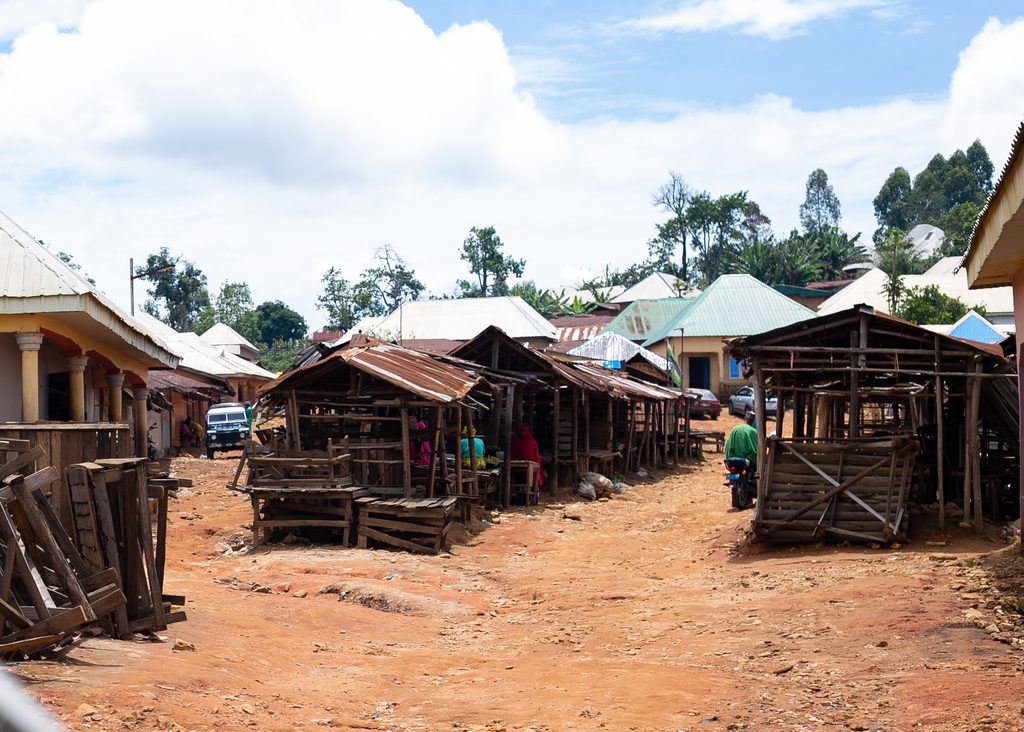
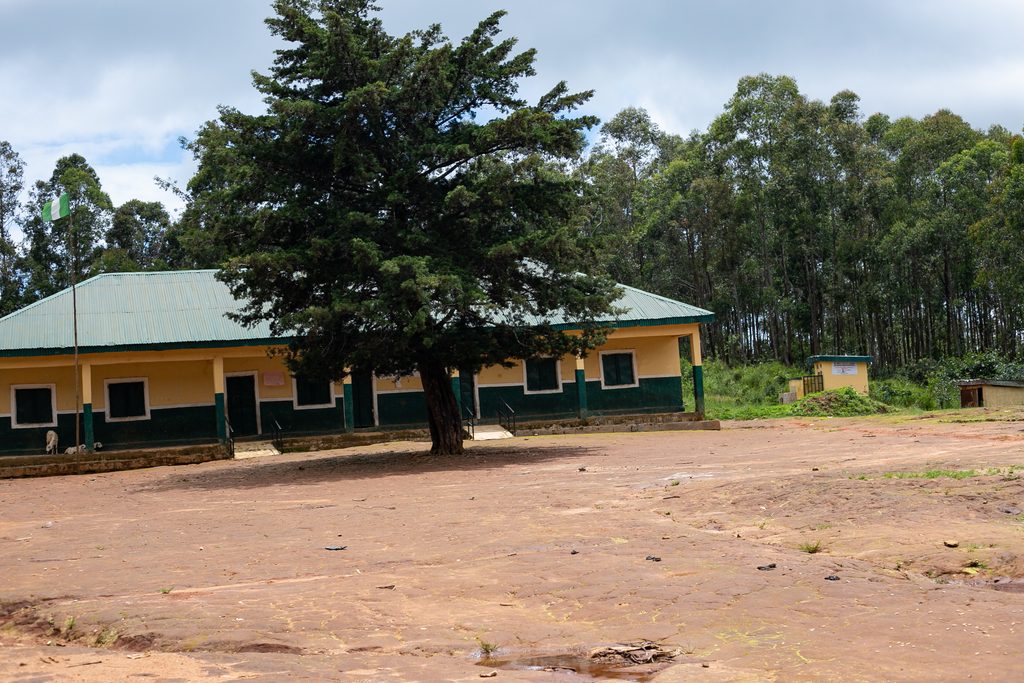
It is Friday morning in Yerimaru, a village near the Nigeria-Cameroon border in Taraba State, northeastern Nigeria. The morning sun breaks through the cold hanging over the green landscape, casting long shadows from the tall eucalyptus trees. Sitting on a low wooden bench outside her rented home, Hauwa Bouba searches through a worn handbag, hoping to locate her refugee card.
Three years ago, she fled from Binka in Cameroon’s Northwest region following the violent Ambazonia crisis that erupted across the country’s Northwest and Southwest regions in 2017, pushing families to cross into Nigeria seeking safety away from gunfire and burning villages.
“Our house was burnt, my father was killed, plus my two siblings and four nephews,” she recounted with teary eyes. Hauwa could not forget how the violent clashes between Cameroonian military forces and armed separatist groups left her home in ashes, forcing her to escape to Yerimaru with nothing but a few belongings.
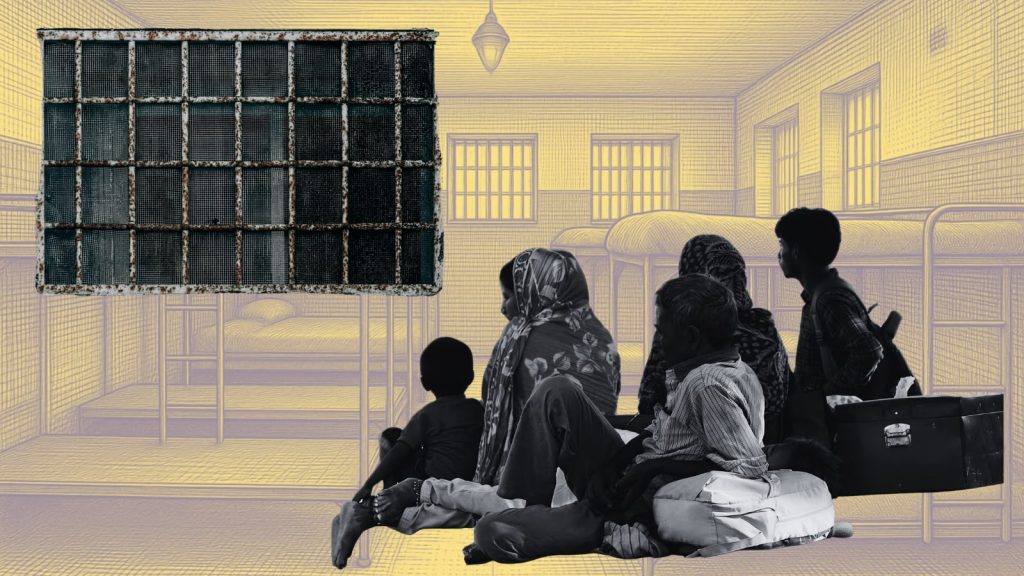
She is not alone. Nearly a decade after the conflict began, many more women like Hauwa have since arrived in Yerimaru and other communities across Sardauna local government area of Taraba State with children who possess no birth documentation, hold no official status in Nigeria, and remain entirely disconnected from their homeland.
According to data from the United Nations High Commissioner for Refugees (UNHCR), over 70,000 Cameroonian refugees have crossed into Nigerian border states, with Taraba hosting thousands. The majority of this displaced population are women and children.
Brought across the international border by their mothers or born in exile, these children face a wall that shuts them out of formal education, healthcare, and basic civic protection.
Without recognised birth papers or official identity records, getting basic medical treatment becomes more challenging whenever Hauwa’s two children fall sick.
“When my child gets sick, things get difficult because there are not enough functional primary healthcare centres around here,” Hauwa explains, as she heaved a sigh, after years of navigating healthcare barriers. “The working ones are far away. Even if we could travel there, which we often cannot because of the high transport cost, we cannot just walk into the hospital and get care like others unless we have a lot of money. They ask for identity papers or birth records that we do not have, or demand extra payments. Most times, I just rely on local medicine sellers or chemist shops where we can buy over-the-counter drugs on credit.”
On days when the illness worsens and credit runs out, prayer becomes her only alternative.
Caught between two Legal Systems
Under Section 25 of the 1999 Constitution of the Federal Republic of Nigeria, birth on Nigerian soil does not automatically grant citizenship unless at least one parent is a Nigerian citizen. At the same time, because their parents fled active conflict without access to consular services, many children born in border settlements like Yerimaru lack Cameroonian birth records. Trapped between two legal systems, these children are left without recognised citizenship on either side of the border.
Although some children received refugee identification cards through UNHCR registration drives, primary healthcare centres in remote border areas often lack official registers from the National Population Commission (NPC). Nationally, UNICEF reported that 50 percent of children under five remain unregistered at birth, and in borderlands like Yerimaru, local health workers said that figure is significantly higher. As a result, hundreds of children are growing up completely unrecorded by any sovereign state.
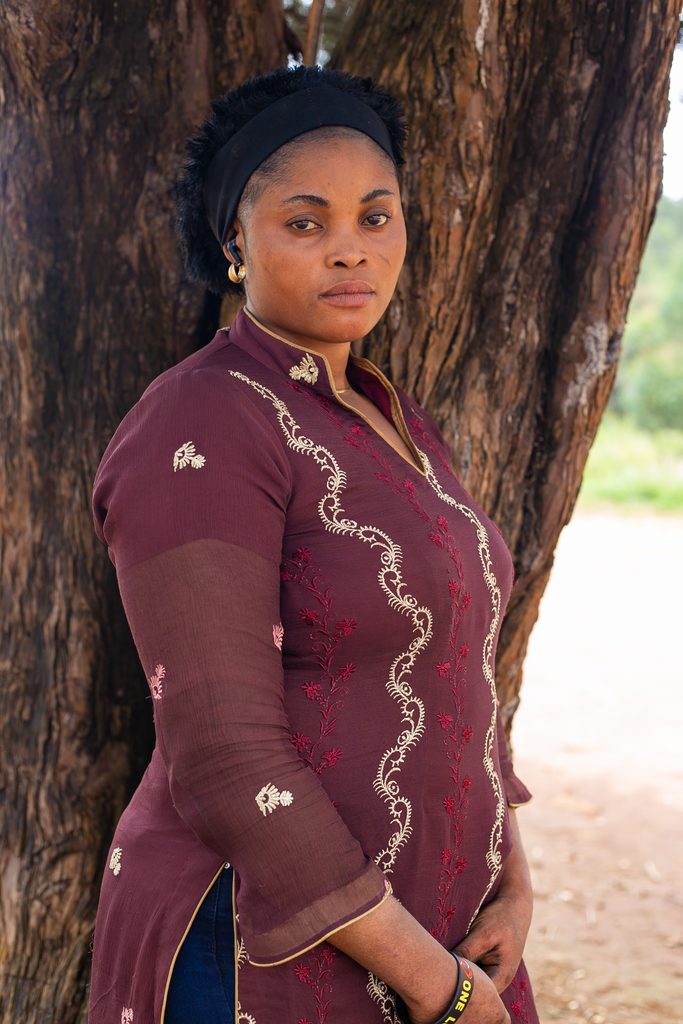
For 46-year-old widow Chalotte Beri, who fled Cameroon after her husband was killed in the conflict, watching her children grow up without legal papers brings a daily weight of fear and uncertainty.
“I have six children, and all of us only have refugee identity cards,” said Chalotte, sitting on a wooden bench, metres away from her small rented house in Yerimaru.
Without recognised documentation, her children cannot get healthcare support or stay in school.
“Some of my children were going to school back in Cameroon, but here, everything stopped,” she told Diaspora Africa. “The headmaster allowed two of my youngest to sit in class, but now that my eldest is due for secondary school, we are stuck. He needs a birth certificate and a NIN for exams. His good performance is going to waste because, without those papers, his education ends here.”
In Nigeria, advancing into secondary education and registering for national terminal examinations, including the Senior School Certificate Examination (SSCE) administered by the West African Examinations Council (WAEC) and National Examinations Council.NECO, alongside the Unified Tertiary Matriculation Examination (UTME) requires formal identity verification.
Back in 2021, the Joint Admissions and Matriculation Board said that obtaining a National Identification Number (NIN) would be compulsory for candidates applying to higher education institutions. Expanding this directive earlier this year, the National Identity Management Commission (NIMC) announced that a valid NIN is now strictly mandatory across all school enrollments, national examinations, and educational scholarship applications.
Across the border in Cameroon, presenting a birth certificate is likewise required for pupils sitting for the Certificat d’Études Primaires (CEP) or the First School Leaving Certificate (FSLC).
A future at risk
Chalotte also worries about her children’s safety as they mature along the porous border, where they face high risks of human trafficking, forced labour, and early marriage.
“Because they do not have identity papers or birth certificates to prove who they are or how old they are, they are vulnerable,” she said. “When they go out to do daily labour like carrying timber to earn small money for our food, people exploit them because they know these children have no protection.”
Community members told Diaspora Africa that the children face extortion at security checkpoints, with some being forced to pay up to ₦4,000 per checkpoint by immigration officers, despite presenting official UNHCR identification documents.
The same violence that uprooted Chalotte from her hometown of Lus in Cameroon seven years ago left a lasting scar on Sylvia Emmanuel. She still remembers the day it struck without warning. Homes were torched, livelihoods destroyed, and lives cut short in minutes.
“My younger brother and my daughter were killed the first time the gunfire reached our neighbourhood,” Sylvia said, her voice breaking as she spoke.
Now living in a rented room in Yerimaru, Sylvia is raising her three surviving children, aged ten, eight, and six. Her youngest was born in Yerimaru, making him the only one born on Nigerian soil. While all three hold official refugee status under her document, their daily reality remains difficult, especially when it comes to basic healthcare and social support.
In Cameroon, Sylvia was an independent fashion designer who regularly traveled to Buea, a major commercial town in the country, to buy and sell fabrics. When the conflict destroyed her shop and inventory, her financial independence vanished overnight. Unable to buy a sewing machine or rent a shop in Nigeria, she now survives by selling boiled groundnuts and chin-chin on busy market days.
Her economic struggle directly impacts her children’s health. When her six-year-old son, born in Yerimaru, suffered a severe fever recently, Sylvia found herself completely locked out of the local healthcare system.
“Humanitarian organisations like JRS used to visit us regularly, and they helped cover hospital costs and brought free medicine. But since they stopped coming, we are on our own. When my son fell sick, the local clinic asked for fees we could not afford and formal documents we did not have. I had to rely on small patent medicine shops,” Sylvia explained.
Sylvia also fears for her children’s long-term safety as they grow up in a community where they are constantly reminded of their outsider status.
“My biggest fear is their future,” she said. “My oldest child wants to go to secondary school, but private schools are too expensive, and public schools require formal identity cards. Without papers, my children cannot get good jobs tomorrow, they cannot open bank accounts, and they cannot move freely without being questioned by security agents. I feel like they are living like ghosts, alive, but not recognised by any government.”
‘Left on our own’
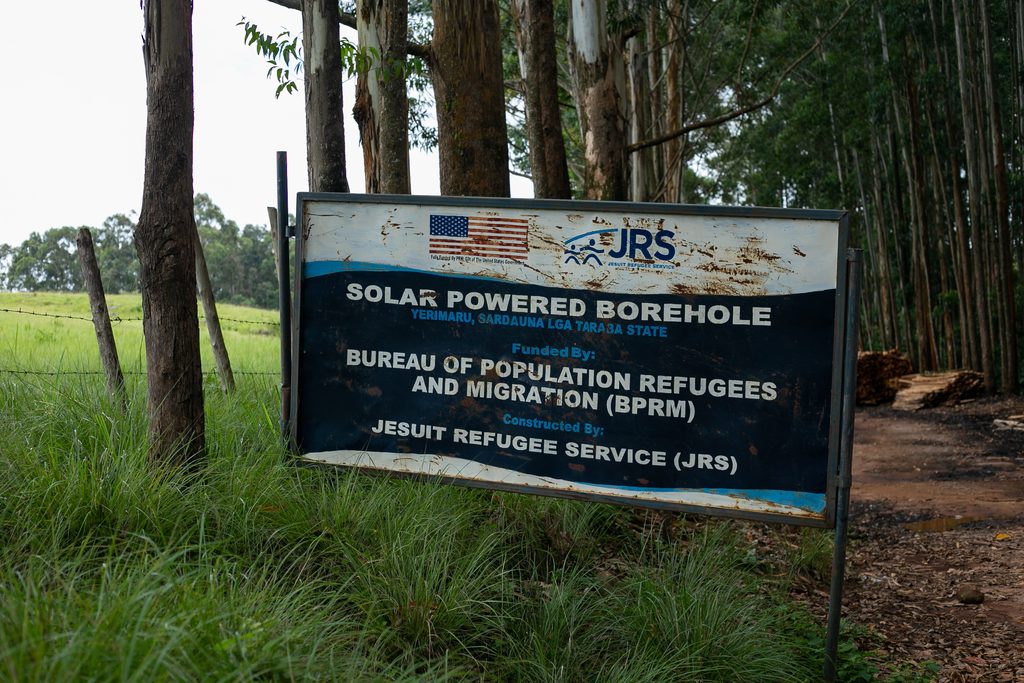
Making matters worse for families like Sylvia’s and Charlotte’s is the retreat of international aid. Over the past two years, severe funding shortfalls have forced organisations like the Jesuit Refugee Service (JRS) to scale back operations in remote parts of Sardauna, leaving impoverished mothers to fend for themselves.
“We have lost some of the children because of these health challenges and hunger,” said Margaret Bernard, a refugee protection worker in Sardauna. She also added the need for government institutions to step up and address this crisis of undocumented children, especially by sensitising border security agents on recognising refugee documents.
And until such systematic interventions take root, these children remain neglected. They are unclaimed by the country their mothers fled, and legally unrecognised in the land they now call home.
Yet the mothers themselves find little solace in border areas like Yerimaru.
“There is no comfort here. I live in a rented house with the children, but there is nowhere to return to because my family members were mostly killed,” said Hauwa.
This story was supported through the Reporting Labour Migration (RELAM) Programme implemented by StoryMi Academy, funded by GIZ Nigeria, and delivered in partnership with Diaspora Africa and Tell That Story
Writer:      Yahuza Bawage
Editors:     Chimee Adịọha, Todah Opeyemi
Art:         Diaspora Africa
Photography: Ahmed Abubakar Bature