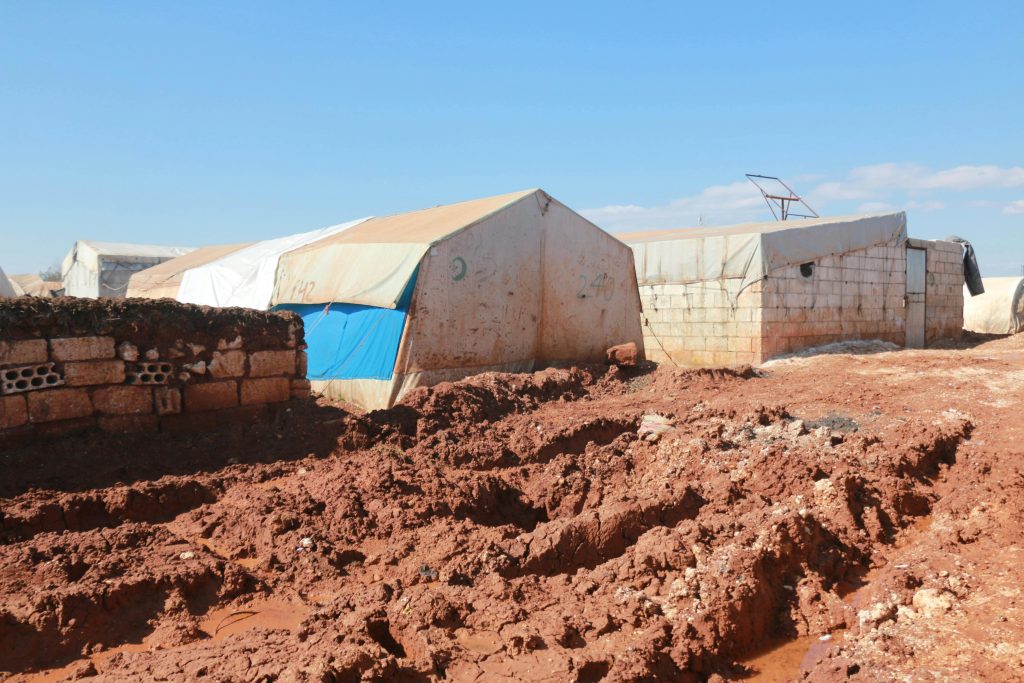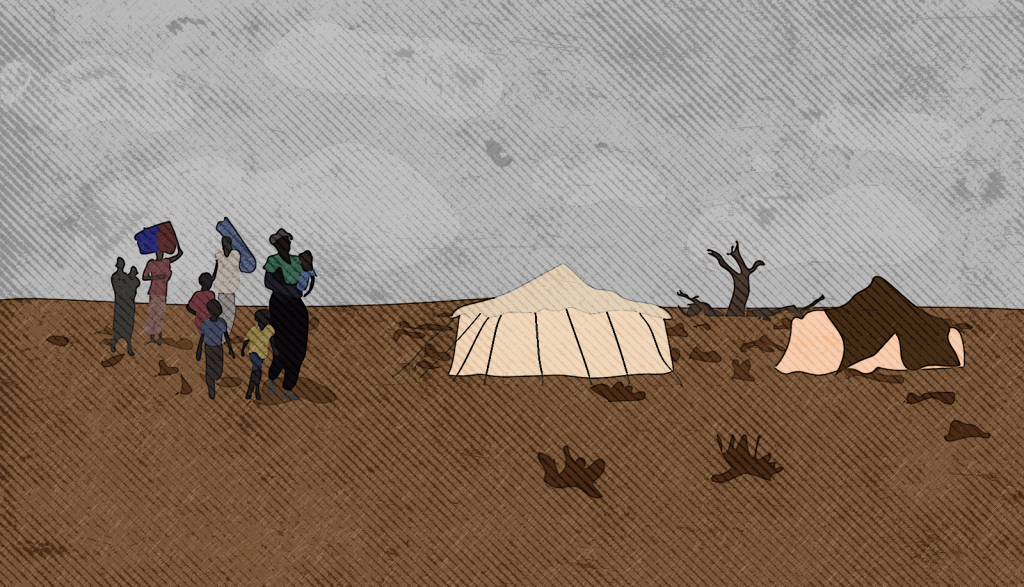


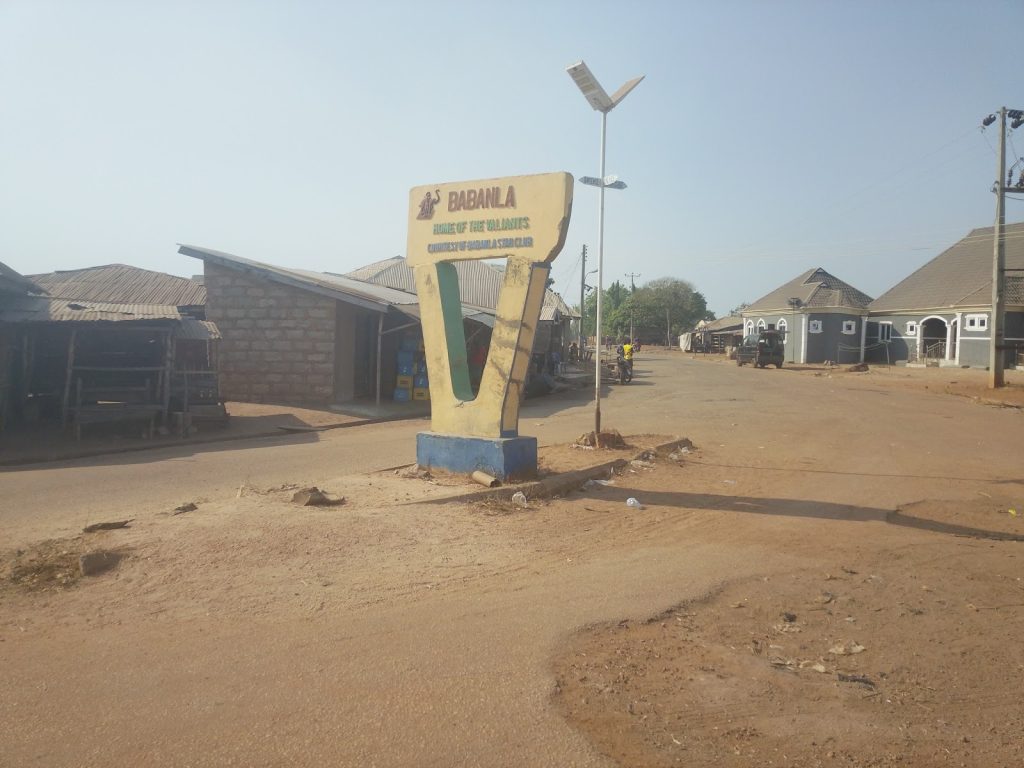
Lateef Oba was a farmer in Babanla, an agrarian community of Kwara State, until bandits came. For several years, farming brought food to the table of his family, but a series of attacks on his village had most people, including Lateef, scrambling for their lives. Like other people who left his village, Lateef headed to Esie to pick up a new hustle. He settled for commercial motorcycle riding.
“That night, when they entered our village and started shooting in the air. People were rushing to safety. Although that was not their first attack on Babanla, after that attack, was when I knew our village was no longer safe,” Lateef narrated his woes.
The next morning, Lateef took his daughter. While his wife carried their little son as they departed the village. “To be very honest, leaving everything behind is very sad, but life is more precious than any farm land,” Lateef told Diaspora Africa.
He further explained how difficult life, survival and his new fate have been. “This (okada) work is not easy; but there is no other means for me to feed my family, ” Lateef explained. Since it brings food to the table and they are alive, he is grateful.
Kwara: New Hotspot for Terrorism
For more than a decade, Nigeria has struggled to contain the menace of banditry, a crisis that has devastated communities, especially across the Northwest states of Sokoto, Kebbi and Zamfara, as well as parts of the Northeast like Borno. Now spreading like a pandemic, this wave of violence has now crept towards North Central. Since the beginning of the year, states such as Kogi, Kwara and Benue have recorded a surge in brutal attacks on rural communities.
In many of these terror-ravaged areas, jihadist groups have forced residents into uneasy “peace agreements,” demanding taxes from farmers for planting and harvesting. Those who refused to pay often paid with their lives.
Since the start of 2024, Kwara state has recorded numerous incidents of attacks, kidnappings, and other violent crimes. For instance, in September, gunmen killed 10 people, including a pregnant woman, in Matogu village, Patigi Local Government Area of Kwara State. Several communities in Ekiti, Asa, Moro, and Kaiama LGAs are raising repeated concerns over increasing bandit movement through forest corridors linking Kwara to Kogi, Ekiti, and Niger states.
According to a 2022 SBM Intelligence report, an alarming rise in kidnappings, gang violence, inter-communal conflicts, targeted killings, and cattle rustling was highlighted. The report noted that Fulani militants and herder-resident conflicts were often blamed for escalating violence. Between January 1 and November 7, 2025, at least 207 people were reportedly killed in the state, including 84 civilians. During this period, 177 individuals were reported to have been abducted, with Ifelodun, Pategi, Kaima, Irepodun and Osin LGAs having the highest number of victims.
According to Armed Conflict Location & Event Data (ACLED), which tracks violent incidents across Nigeria, including attacks by bandits, herders, and other non-state armed groups exploiting ungoverned areas, shows that on average, this translates to roughly two deaths every three days in the state.
Out of the 207 fatalities, 84 were civilians, while 123 deaths were linked to state or non-state actors. In another instance, in April 2025, armed terrorists attacked a vigilante group in Kemanji, Kaiama local government area of the state, killing over 15 members and villagers.
The majority of fatalities were concentrated in four LGAs, with Ifelodun recording the highest deaths of 93 fatalities, nearly half of the state’s total. This included 22 civilian-targeted and 71 deaths associated with state or non-state actors. Pategi followed with 26 fatalities, including 16 civilians. Kaiama and Baruten also recorded high numbers. Together, the four LGAs account for 164 out of 207 deaths (79.23 per cent), showing that most attacks are geographically concentrated in that area.
More Woes
Abdulqadir Usman was about to have his dinner in his hut in Shagbe, Ifelodun local government, Kwara State, when the news of his brother’s demise was brought to him.
“I was told he was shot and killed on his farm. It was devastating news that shattered my heart,” Usman told this reporter.
Usman used to be a herdsman, but when this reporter met him, he was a bike man.
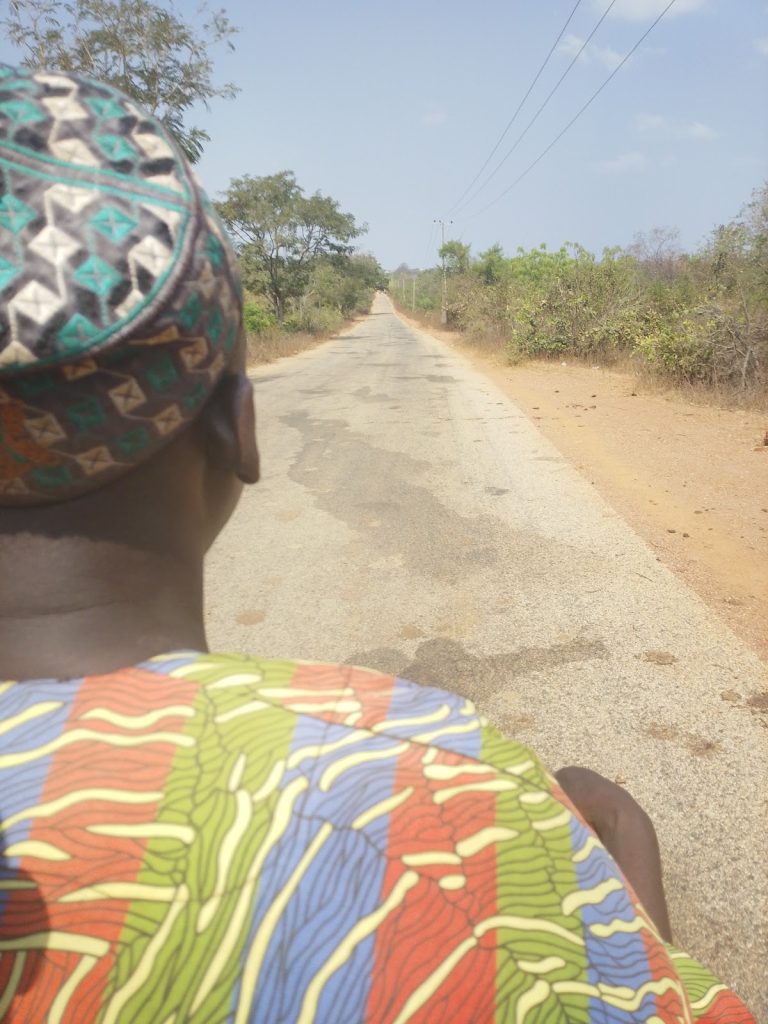
Usman became a bike man after the attacks forced him out of the herding business. Credit: Habeeb Olokooba.
Usman explained how he and his family left Shagbe, his village, for Oke Ode, another village about 20kilometers away, and transferred all his 50 cows to his friend in Shaare when the attack became persistent.
“They don’t only attack farmers on their farms, they attack herders too. They normally beat the herdsmen and take their cattle,” Usman explained.
“Now I have to cater for my family with any sum I’m able to make from conveying passengers,” he explained.
“Those of us who stayed behind still don’t have access to our farms,” noted Adam Ahmed, another farmer from Babanla.
He explained to Diaspora Africa how insecurity has crippled the farming business and how the presence of soldiers in the village doesn’t stop farmers from getting attacked.
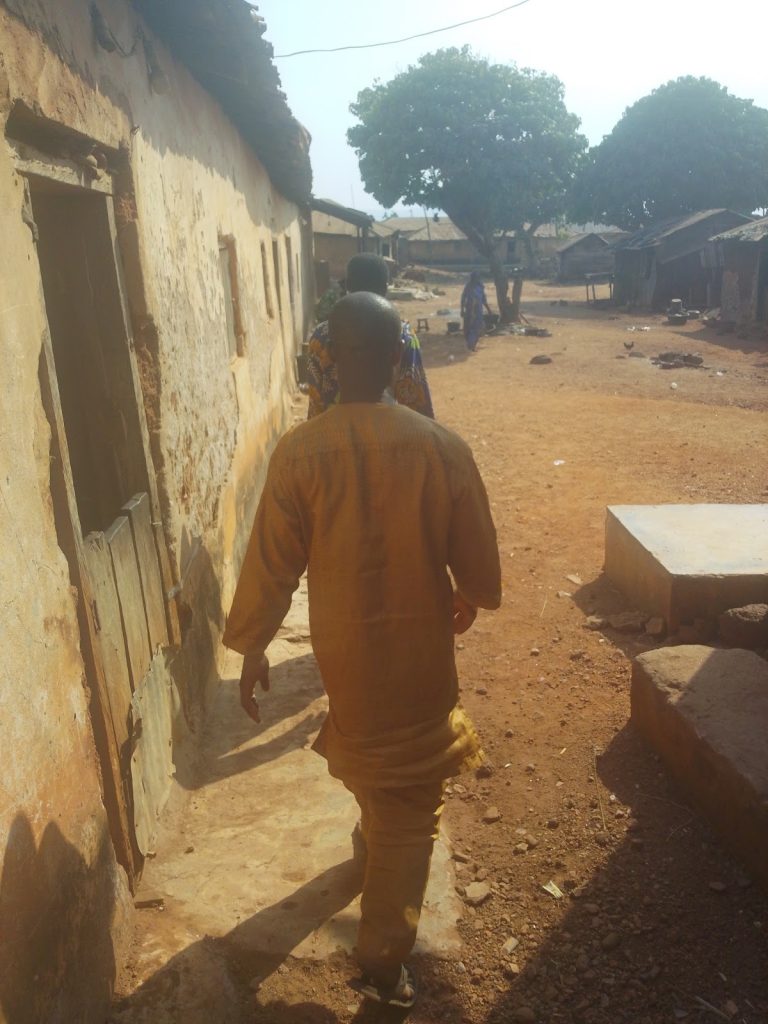
“So many of our friends who do this business together have left farming when it has proven impossible. The few of us that are left couldn’t go to the farm,” Adam explained.
“Just yesterday, two of our boys transporting guinea corn from the farm were kidnapped by armed bandits. These are news that unsettle us every day and keep us away from farms,” he ended.
Community Policing
“The Insecurity Challenge in Kwara South is a new one. It has been happening so bad since a few months,” explained Elder Olaitan Oyinlola, the coordinator of the Kwara South; joint security Task Force.
He furthered that they had problems with hoodlums breaking into houses, armed robbery cases, as well as a few cultism problems. “However, the issue of banditry started a few years back, and we have been trying to curtail it until it escalated about four to five months ago.”
He gave the example of a DPO that was killed by armed bandits three years ago, at Oreke and the 200 students from Kogi who were kidnapped to Baba Sango, which was later discovered as their hideout (The Aso Rock of Bandit). It was a large and thick forest which was a border between the Edu local government and another local government in Kogi state. It was a good place for them to hide.”
He furthered that, at some point, Bandits raided Babanla, a rural community in Kwara. “There were almost 500 of them; they kept ransacking adjoining communities. As I’m talking to you, not less than 25 communities have been deserted along that area.” Elder Oyinlola explained.
In a bid to make sure that the place is safe, they mobilised the forest guard, vigilantes, including Mayeti Allah, in collaboration with National Security personnel, to protect their territory.
With the state’s government intervention, the federal government gave them a brigade having close to 1000 military men and some new weapons with sophisticated ammunition, which they had no access to before, which the bandits had been using for a while in their operations. “In the next few months, we will be able to curb the incessant attacks. This, as they are doing for Ifelodun in Kwara South, part of Kwara North was also affected, that is Edupatigi, where they killed more vigilantes in the process.”
What the Expert Thinks
Speaking with this reporter, Abdulgafar Muhammad, an experienced agriculturist, explained that this situation can lead to reduced food production in the rural area.
“As fewer farmers will stretch on the available ones, as they might put it upon themselves to produce enough for the community (very hard) and even at that, less land will be cultivated, leading to lower yield,” he explained.
“This can result in food scarcity as local markets, even in urban areas where there is no banditry or insecurity, might struggle with supply, leading to higher prices in consumable products.” Mr Muhammad added that farming is a big part of rural economies, and insecurity, if not addressed, can worsen the poverty rate.
“As they might have to start buying from afar, and we also know how things work around here, the higher the lack of proportionality in demand and supply, the higher the chance of price rising.
Plus, when peace is unavailable, talents and passion are handicapped, and the necessary are not really taken care of.”
Way Forward
Mr Muhammad explained that till insecurity is addressed by the government, we will be left behind.
“Also, the government can provide resources, training, and possible financial aid for farmers to stay or relocate sustainably. We can also encourage alternative income sources for farmers who can’t continue farming in the area as a result of the situation preventing them from entering their farms freely,” he ended.
Writer:  Habeeb Olokooba
Editors: Amaka Obioji, Chimee Adioha
Image:   Safari Consoler