

A livestream can allow someone to witness a funeral. A phone call can keep a relationship going. A video call can bring a grandmother into the room. Money can support a family from thousands of kilometres away. But there are still moments that cannot be experienced through a screen: sharing a meal, physical care after childbirth, hugging a sibling, standing beside family at a wedding or burial, or simply hearing someone laugh in the same room.
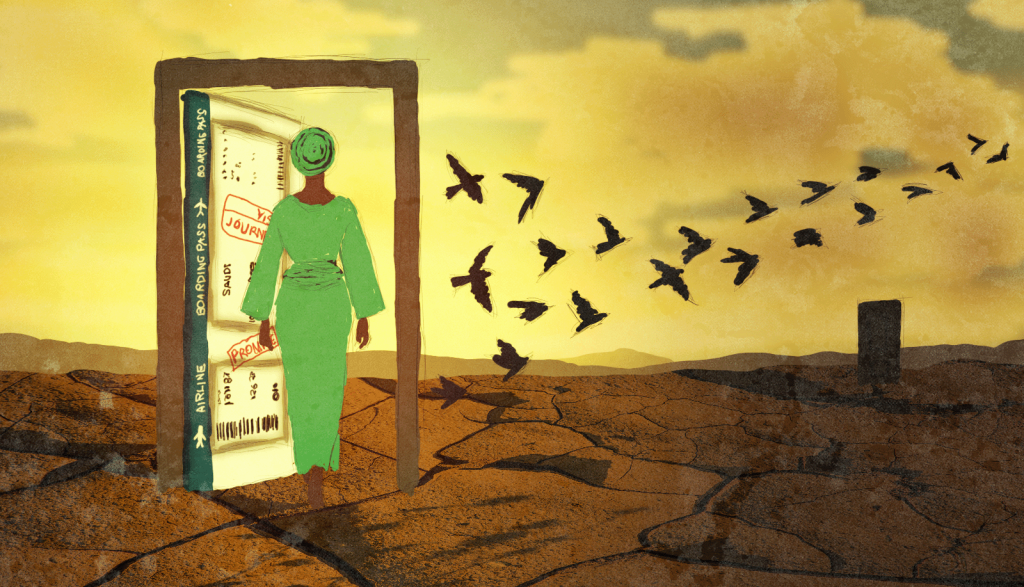
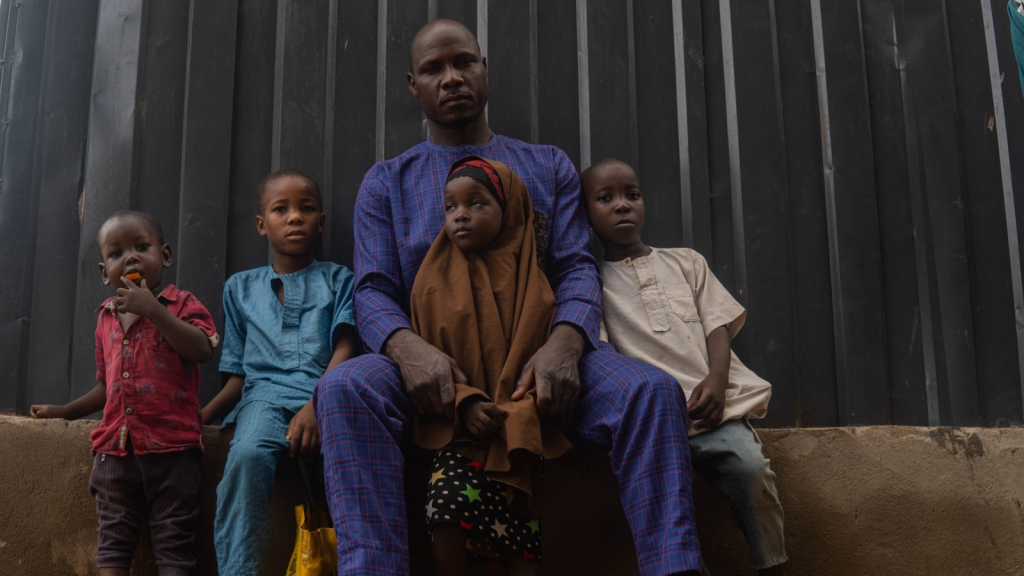
Ojiugo was six when her father left Nigeria in 2003 to seek greener pastures abroad. He said he would be gone for six months and would be able to provide a better life for his family on return. Twenty-three years later, he has never returned home to live with them.
According to the IOM, there are over 17 million Nigerians in the diaspora. But for many families, migration also changes relationships, rewrites the meaning of home and causes traditions to evolve.
Before her father left, Ojiugo remembers him bathing her and her siblings, bringing home suya and speaking Hausa, a language he had picked up while living in northern Nigeria as a young man. She also remembers an ordinary childhood moment when she and her brother pulled a dangerous prank on their younger sister that left her with a burn. Their father removed his belt to flog them, then hesitated and did not. Her youngest sibling was two months old when he left, and her mother was 25. The six-month absence became a way of life. Relatives lived with the family and some were connected to the businesses he had left behind, but they did not replace him.
“They’re your uncles, they’re not your father,” Ojiugo recalls.
Her father missed milestones, including Ojiugo’s university graduation, and was absent the year one of her siblings struggled with an addiction. His absence was particularly painful when her grandfather died. For the first time, she hoped her father would return. But he did not.
“I mean this was his father. I had really, really, really, really, really, really hoped that he was going to be around. So, it was just very, very disappointing.”
Moving abroad to join him was never an option either, as the relationship continued to deteriorate through inconsistent phone calls from her father, sometimes once every one or two years. They were still welcome but those conversations did not create much room to ask her father why he had been away for so long.
Ojiugo often wonders if there were difficulties or circumstances that prevented him from simply coming home to his family, but she has never gotten an answer as to why he cannot come.
“I don’t know.”
There were other questions that she still does not have an answer to.
Ojiugo recalls the “shock” of learning that her father had another family. Her mother, meanwhile, has never remarried, insisting she’s not a widow or divorced even though her husband has been away for decades as their marriage was never formally dissolved.
Their relationship continued intermittently through calls until a tense phone call in 2023, when Ojiugo confronted her father about his absence and its effect on the family.
She hasn’t spoken to him since.
Even when the separation is temporary, families still face challenges as they adjust to the absence of a family member.
For Bimbo, her husband moved to Lithuania in 2023 to pursue a master’s degree and a chance to give their children a better future. They lived apart for just two years, but it still tested their relationship. Before the move, they had worked in the same firm in Lagos. Distance meant losing some of the small, everyday moments they shared.
“I missed his cooking a lot,” Bimbo says. She also missed “gisting face to face, sharing instant funny moments.”
Bimbo remained in Nigeria with their two children as their primary caregiver, a responsibility they had both handled before his departure. Joining him straight away was not possible because her husband needed to be financially settled first and secure a good job. She credits phone conversations for making it less lonely.
“Thank God for WhatsApp video calls!”
They spoke at least twice every day so that her husband could still be a part of their children’s lives.
But even with the help of technology, it still required patience as they navigated time zones, internet issues and concerns from well-meaning family and friends during their long-distance marriage.
Even when migrants and their families finally reunite after years of communicating virtually, there are still challenges. Being physically present does not always mean an instant emotional connection. Bimbo and her husband eventually reunited in Lithuania after two years apart in 2025, but it still came with some adjustments.
“We were shy when we saw each other physically for a long time, our intimacy was challenged. Long distance marriage is not for the weak.”
After years apart, it can be hard for migrants and their family members to fall back to old routines.
Staying Close to Home
For those whose physical reunion is difficult or impossible due to visa restrictions, travel time or work commitments, financial support can become another way of connecting and contributing to family at home, from supporting their education, wedding ceremonies to funerals.
According to the World Bank, in 2025, remittances from Nigerians in the diaspora exceeded $23 billion and accounted for 7.8% of GDP.
But finances cannot always replace presence or combat loneliness, like having your sister at your wedding or having grandmothers help a first-time mother during Omugwo, the traditional postpartum care given to new motherscare.
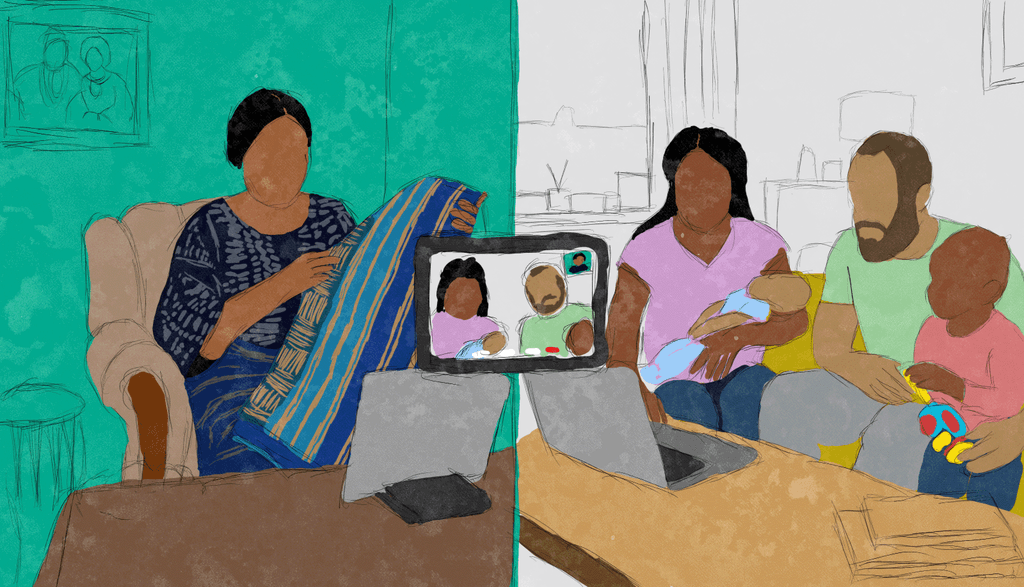
For Yucee, who has lived in Germany for over nine years and has three children, video calls with her mother became part of her postpartum support when she could not have her mother physically present.
Technology, however, is often a bridge to keeping their presence alive, as new mothers can receive emotional support online and grandparents can join naming ceremonies through virtual calls.
Yucee’s first two pregnancies and the periods after childbirth were difficult without the traditional support she would have had in Nigeria. With her third pregnancy in 2025, she knew she needed help.
“I couldn’t see myself doing this again,” she says.
This time, she invited her mother to Germany.
The difference was not simply having another person in the house. It was being cared for by someone who understood the cultural expectations around childbirth and could provide the practical support that a video call could not.
During her earlier pregnancies, Yucee had relied on her husband, friends and constant calls with her mother. Friends also became an important part of her support system.
“I had no experience. I went straight from the hospital to the kitchen to prepare the hot water soup traditionally eaten by women after childbirth, with support from my husband,” she recalls.
A friend eventually came to help her bathe the baby for the first time and brought food.
But not everyone can afford to have their mothers come, and physical support cannot always be replicated through a screen.
A Nigerian in the UK whose mother could not come because the family’s finances were tight describes her postpartum care without traditional support as “Crazy”, even though her mother called.
“I had sleepless nights and was trying to figure out breastfeeding. I cried through them, even as I wished my mother could be present to help with cooking and the baby.”
For others, technology becomes particularly important during moments when being physically present is impossible but tradition requires their participation, like funerals.
Family members based in Nigeria sometimes stand in for rites traditionally performed by absent family members, while the funeral is streamed online using platforms like Facebook Live for those abroad. Watching the burial through a screen can help them experience a sense of catharsis during grief.
The same improvisation has become possible around traditional wedding ceremonies.
Some families choose to hold the traditional wedding virtually rather than postpone the marriage indefinitely if one or both partners are away from Nigeria. The bride price can be settled and family members gathered in person, while the couple joins virtually.
The screen allows the ceremony to happen, but it cannot recreate the moment exactly as it would have happened if they were in the same room.
There is no photograph of the couple physically receiving prayers from their parents together, something that cannot be replicated virtually.
For families raising children abroad, staying connected to home can require even more deliberate effort. Nigeria can become a second home, similar to the relationship Nigerians living at home may have with their villages, returning for the occasional Detty December.
Parents often incorporate Nigerian cuisine into family life, give their children Nigerian names and even hire language teachers in an effort to teach them their culture but it isn’t always successful.
Chineme*, who has been a teacher for about fifteen years teaches Nigerian children abroad Igbo. She began doing so more intentionally in 2017 after seeing parents ask for help keeping their children connected to the language. But that is only one part of the challenge.
“Children are not necessarily going to learn a language because we put them on Zoom and tell them to repeat ‘Kedu?’ ten times. They are growing up in a very stimulating world. The teaching has to compete for their attention every time.”
The language cannot survive only in a classroom. It has to live in the home, in greetings, food names, songs, stories and conversations with grandparents. The challenge is exposure. The foreign language dominates school, friendships and much of the media children consume. One hour of Saturday Nigerian language lessons cannot compete with the other 167 hours of the week.
Families are creating these small bridges to connect them to home even as the home they left behind is changing in their absence.
Home Is No Longer a Single Location
For those left behind, the things the people they love leave behind can become reminders of a home that no longer is. They can seem like clutter as they attempt to rebuild a life that does not involve the person who left.
Ojiugo says that after more than two decades of her father’s absence, she and her sister finally discarded a bag belonging to their father that contained his old suits.
“We needed to make space, but my mum was upset because she said the bag was still good and there was nothing wrong with it.”
Those moving abroad often pack as much of home as they can into a suitcase. Migrants travel with pieces of home nested in photographs, language and even food.
For Bimbo, Nigerian food made up the majority of her luggage when moving to Lithuania.
“I travelled with ten bags, six were filled with Nigerian food and spices, from yaji to ogiri, Ijebu garri to amala, abacha to palm oil.”
For migrants who make a new home abroad, home can come in other forms apart from food: a playlist with sounds from Rex Jim Lawson to remind them of their home in Port Harcourt, photographs of loved ones or even a familiar family scent woven into the threads of a bedsheet from home.
Although technology is a bridge to home for some migrants, it is not a replacement, because while memories can travel, home often takes on a new shape for the migrants and the people they leave behind as they try to make room for a life without family members being fully present.
Migration may not always mean abandoning one home and finding another. It can mean learning to belong to more than one place and call them home.
Names marked with * have been changed at the request of interviewees.
This story was supported through the Reporting Labour Migration (RELAM) Programme implemented by StoryMi Academy, funded by GIZ Nigeria, and delivered in partnership with Diaspora Africa and Tell That Story
Writer:  Jessica Ireju
Editors: Chimee Adịọha, Todah Opeyemi
Art:     Diaspora Africa