

Whether in the dead of night, when the rest of the world slumbers or in the dawn of the day when the road rejoices, Zamfara State in northwestern Nigeria is gripped by the terror of a relentless crisis. Bloodshed and despair have seeped into the daily lives of its people, who have been made prisoners in their land.
It was a cold September at Yan Uku village. Sheu Muhammed Sheu, a recent graduate of Usmanu Danfodiyo University, Sokoto, had not healed from the recent demise of his mother, Hawau Muhammed, when another tragic news was broken to him. This time, his brother and other villagers had been abducted alongside hundreds of cattle.

“What sad news! We are really in critical condition in Northwestern Nigeria; nobody is safe,” Muhammed lamented with a pained heart, stating how Zamfara suffers from bandits daily.
According to an African journal report, Zamfara, a state once lively with agriculture and livestock, is now ghostly, as villagers take refuge in the bushes, abandoning homes and livelihoods to escape kidnappers and raiders. The stark reality is that for the people of Zamfara, survival has become a daily battle against an invisible enemy.
A recent report shows how Zamfara has become home to bandits. There are about 85 major bandit camps across the Northwest, and over 46 of these camps in Zamfara and the neighbouring states of Sokoto, Katsina, Kaduna, Katsina and Kebbi are greatly influenced and controlled by Kachalla Halilu.
Insecurity heightens
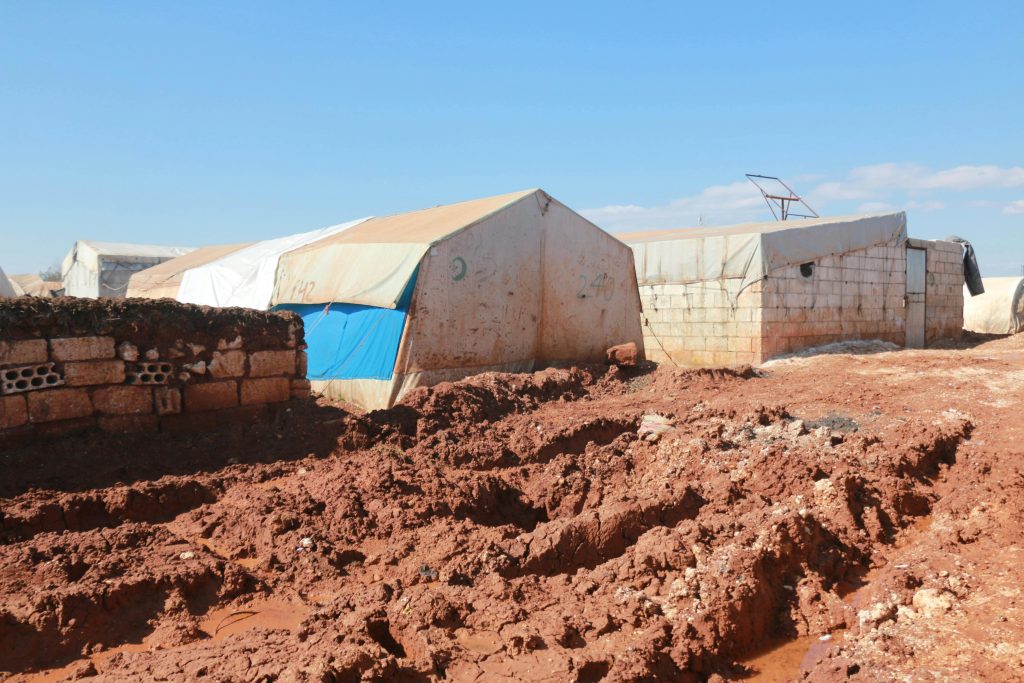
It was noon of September 2024 at Anka Internally Displaced Person (IDP) Camp, Umar Abubakar, 40, father of 10, woke up in Gigib village in Anka Local Government Area to the sound of gunshots. Before dawn, armed bandits had surrounded his village in Zamfara State, northwestern Nigeria. By sunrise, his entire livelihood, 50 cows and over 50 sheep, had vanished, bandits wielding military-grade weapons. Today, Abubakar lives in Anka displacement camp, one of over 29,000 people whose lives have been shattered by relentless violence in a region once known as the heart of Nigeria’s Agriculture. Despite leaving their home for safety, the Anka IDP camp also faces frequent attacks. “They attacked us over and over, killing our people and kidnapping others. I had to pay nearly 2 million naira for my kidnapped wife and elder brother. Even here, they follow us. We sleep with one eye open, afraid they will come for us at any moment.”

For Umar, life before the bandit crisis seems like a distant memory. He once thrived on his farmland, raising cattle and sheep, tending to crops, and living in peace. “Now, nothing left, cattle worth over ten million naira lost in a single raid.”He said. Their children are starving; food prices are high, and they can not even afford the basics. “Life is unbearable,” he sighed.
The toll is visible across Zamfara: abandoned farmlands are a common sight, left untended out of fear that any visit could be their last breath, resulting in hunger, scarcity, and a loss of independence. “We cannot farm anymore; our land is all we had, and now we can not even work it because of the constant threat of attack,” Umar explained.
Many villagers have endured beatings and torture at the hands of their captors “They treated us like animals,” Umar recalled, describing the trauma of being bound and beaten, hoping that his family would be able to raise the ransom money.
Nura Abubakar, another resident, cried out how all their cattle and sheep were taken away and left with nothing on their livestock farm. “Life has been difficult,” he lamented.
Today, Zamfara’s residents are not only forced to part with their money but also with their dignity and freedom. “We need help from the government to secure our lives,” Umar pleaded.
According to IOM, the displacement crisis in Zamfara is part of a nationwide crisis that encompasses deep-seated clashes between ethnic and linguistic groups, disputes between nomadic pastoralists and settled farmers, and violent criminal activities, including banditry and kidnappings along major highways.
In Zamfara State, the conflict claimed over 1,000 lives and saw 2,000 people kidnapped in 2022 alone. A 2024 report shows that over 120,000 people (about 25,000 households) are still displaced in a conflict that receives minimal international attention compared to Boko Haram’s insurgency.
More Cries
The quiet village of Yan Uku in Talata Mafara Local Government was hit again. Muhammad Mainasara, a resident, recalled the midnight attack when the bandits stormed their homes, abducted three people and stole all their livestock. “They kidnapped my brother’s wife, among others and left us with nothing,” he added that the bandits demanded a ransom that the villagers scraped together through desperate contributions.
Despite a N3 million ransom (about $1,791.09), one hostage remains captive, plunging the community into uncertainty and despair. “This is the fourth time they have attacked us,” with a grieving heart, Muhammad said.
“Running away for survival, we left home and spent our nights in the bushes, no matter the weather. Men, women, and children—none of us can sleep safely in our homes.”
Speaking with Muhammad Madugu, Sheu’s brother, who spent about a month in the bandits’ den, shared his anguish. “We cannot sleep with both eyes closed. We’ve lived like this through the entire rainy season, hiding in the bush, waiting for dawn.”

Despite enduring years of violence, the villagers feel abandoned by their government and security forces. “We haven’t even lodged complaints with the authorities recently because we know there is nothing they can do for us,” Madugu confessed with frustration.
Again, on Monday, the 21st of October, another community was attacked, killing travellers and abducting others. The source revealed that it occurred at Kucheri village, Tsafe Local Government Area, around 6 p,m with the security personnel not able to solve the situation.
As the tension keeps rising, the incident on November 5, when terrorists invaded seven villages in the Wanke district of Gusau Local Government Area (LGA) in Zamfara and abducted over 100 people, including the chief Imam, shows the recurring plight in the communities. They stormed on motorbikes, shooting sporadically before taking residents captive, leaving a trail of fear and destruction in their wake.
Historical Context and Banditry
The bandit crisis has taken a toll not only on the sense of security but also on Zamfara’s social and economic fabric. Just in 2022 alone, statistics show that over 1,000 lives were lost and 2,000 people were kidnapped. Similarly, from 4th to 6th January of the same year, over 200 residents were killed, with over 10,000 suffering displacements.
The fact is that the devastating attacks have left an indelible mark on the villages, causing widespread destruction that extends far beyond the physical. Now, communities have been razed, livestock seized, and families torn apart— spawning a relentless cycle of violence that traps residents in perpetual fear.
Dr Murtala Ahmed Rufa’i, a lecturer and expert in peace and conflict, in his paper presentation, titled “I am a Bandit”: A Decade-long Research in the Bandits’ Den of Zamfara State, attributes banditry in Zamfara to a combination of historical, social, and political factors and illicit mining in the region. He said while criminals had long used the area’s hills as shelter during pre- and post-colonial times, the modern crisis began around 2011 with armed Fulani groups like Kungiyar Gayu and Kungiyar Barayin Shanu seeking to protect Fulani interests amid perceived injustices and marginalisation by authorities and traditional leaders.
Moreover, he stated that politicians allegedly contributed to arming youth as political thugs, who later turned to crime. Over time, the arrival of foreign fighters and an organised arms trade transformed the conflict, especially after Buharin Daji, a key leader of the bandits, was killed in 2018, leading to a splintering of groups and more widespread violence. With kidnapping and ransom becoming central to their operations.
Expert
Behind every account of the crisis lies a complex web of factors. Colonel Abdullahi Gwandu, Chief Security Officer at Usmanu Danfodiyo University Sokoto, links the rise of banditry in Sokoto, Kebbi, and Zamfara states to deep-rooted conflicts between Fulani cattle herders and Birom communities and later hardened by military contractors and during the Libyan war, which enabled the proliferation of arms and ammunition like AK47 into Nigeria and later discovery of Gold in Zamfara.
“The issue started gradually when Birom people began stealing Fulani cows, leading herders and Fulanis from different parts to retaliate.” The tension, coupled with under-governed spaces, weak security, arms proliferation, poverty, and unemployment, fueled banditry in the region.
Gwandu explained that the effects are severe, ranging from kidnapping, murder, and rape to cattle rustling, affecting all surfaces of human life, especially food security in the affected states. “Banditry restricts farmers from working, increases fear, and leads to forced migration, property loss and health crises. This increases the rate of importation and inflation,” he added.
For solutions, Colonel Gwandu emphasised increasing military presence, advanced intelligence and situational crime prevention. “The government should train more military personnel by blending human intelligence with Artificial Intelligence (AI) to combat banditry and informants.” He suggested targeting underlying causes like poverty and education to deter criminal recruitment, adding that Nigeria is tarnished internationally due to this insecurity and advised that the general officers commanding the head division for the Northwest which has its headquarters in Sokoto should be given full support and marching order to ameliorate the matter, “government shouldn’t succumb to external influences if there is any.”
Government Efforts
Sulaiman Bala Idris, the spokesperson to Governor Dauda Lawal of Zamfara State, said the problem of insecurity has been in Zamfara for decades and has manifested in almost all the 14 local government areas of the state, affecting public peace. Presenting a series of efforts by the governor, which include collaboration and empowering the forces, yet the challenges persist.
He explained that informants are one of the challenges, “they hide within the society while supplying the bandits with information,” he added that dealing with informants requires serious restraints to avoid aggravating the problem.
He said previous security approaches failed, prompting a no-negotiation policy with bandits. “So the new approach of no negotiations with bandits has created a serious rift between some security agencies and the state government, but that has been resolved, and now there is synergy and cooperation between the state and the federal government,” he told our reporter.
Writer:         Hussain Wahab
Editor:         Beatrice Nwoko
Photography:    Hussain Wahab
Featured Image: Olakunle Aro

Editorial Oversight: Amaka Obioji, Chimee Adioha