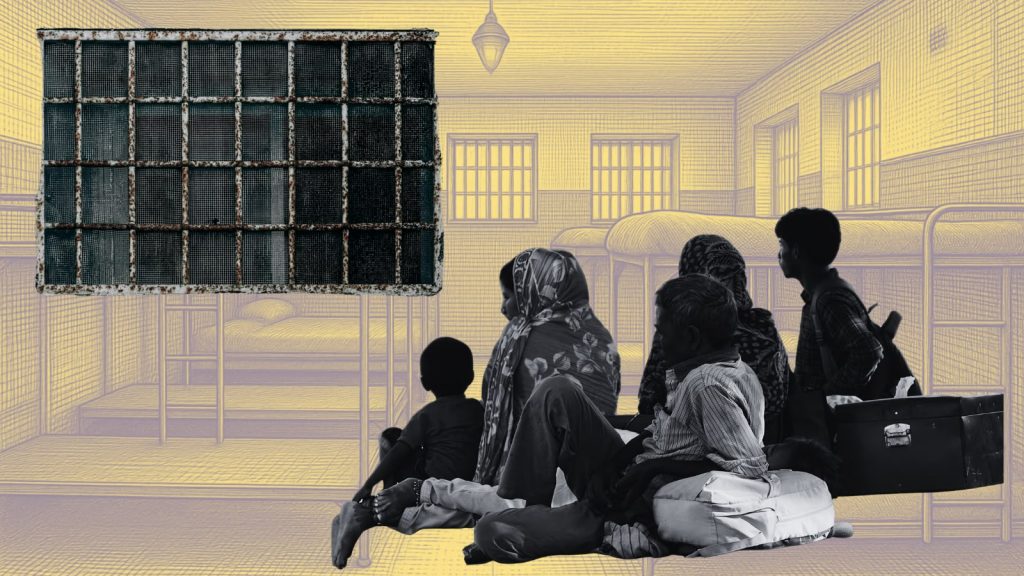


Spain’s offer of legal status was meant for migrants already inside the country. Instead, it sent tens of thousands plunging into the Mediterranean.
THE SPANISH government, known for moving in the opposite direction to many other European countries about immigration policies, announced that 500,000 undocumented migrants already living in Spain, mostly Latin Americans who had overstayed their visas, would get a path to legal status. The paperwork was for people already inside.
But the message got twisted somewhere between Madrid and Morocco. By July, Instagram posts were claiming Spain’s border was opening up. Facebook groups tracked coast guard patrols. TikTok videos showed the exact spot in Fnideq from which to swim the 5 kilometres to Ceuta.
Then the Spanish Supreme Court weighed in. A late-June ruling maintained that migrants arriving by sea could not be immediately pushed back without due process, unlike those who crossed by land. Trafficking networks twisted this into a rumour that anyone who reached Spanish waters could stay.
Consequently, in late July thousands of young Moroccans — youth unemployment in Morocco stands at 37% — waded into the Mediterranean from Fnideq and Belyounech. The highest volume came on Throne Day, when Morocco’s government offices were closed for the holiday. Some of them swam the 5 kilometres around the breakwater in rough seas and thick fog. They arrived on Ceuta’s beaches exhausted.
At least 57 people drowned in the July-August crossings. Others were crushed in stampedes at the border fence. On the Spanish side alone, authorities recovered 72 bodies. Another 11 died on the Moroccan side, totalling about 100 deaths.
“We came because we heard Spain was giving papers,” one young man told local television, shivering in a foil blanket. He swam for three hours. His phone, sealed in a plastic bag, still displayed the TikTok video that told him where to start.
It took days for Spanish and Moroccan authorities to process the arrivals and recover the dead from the water. The regularisation forms, intended for migrants already living in Spain, sat undisturbed in their offices.
A Timeline
The Spanish enclave of Ceuta has been walled since Roman times, with fortifications built in the 16th century. From 2005 to the present, there have been repeated mass attempts to breach the border from Africa. Some succeeded, others were stopped, and many resulted in loss of life among migrants, security forces, or both. Below is a chronicle of those events.
2005
In late 2005, groups of 500 to 1,000 migrants assaulted Ceuta’s border fence. On September 29 alone, 5 were shot dead by Moroccan police, and 214 entered the city. Between August and October of the same year, at least 11 died, and several hundred made it through. Spain responded by raising the fences, tightening cooperation with Rabat, and deploying 500 soldiers to establish what it called a “deterrent military presence.”
2014
In February 2014, at least 15 migrants drowned while attempting to reach Ceuta by sea. The Interior Ministry recorded 19,000 entry attempts throughout that year. The incident, known as the Tarajal tragedy, called for scrutiny after Civil Guard officers used riot-control equipment against migrants in the water, which they initially denied. The Interior Minister later admitted before Parliament that the devices had been deployed.
2016
On December 9, 2016, approximately 800 migrants attempted to scale the heavily fortified border fence into Ceuta. Around 438 succeeded in reaching Spanish territory, while 49 others required medical attention for bruises and injuries sustained during the climb. The mass attempt underscored the continued pressure on the enclave’s perimeter despite years of reinforcement.
2017
In 2017, repeated assaults hit Ceuta’s border. On January 1, around 1,100 migrants attacked the fence with iron bars and stones; only 2 entered, but 5 Spanish officers and 50 Moroccan auxiliaries were injured. In February, over 1,100 tried again, with more than 850 reaching the city. In August, approximately 1,000 overwhelmed the El Tarajal crossing, while a December attempt by 700 saw none enter.
2018
Several coordinated attempts were recorded in 2018. On July 26, around 600 sub-Saharan migrants breached the fence using quicklime, sticks, and Molotov cocktails, injuring 22 Civil Guard officers and leaving 10 arrested. It was the largest organised crossing until 2021. Earlier that year, 500 were prevented in February and only 6 entered in June.
2021
In May 2021, over 10,000 migrants entered Ceuta in the largest single breach in the enclave’s history. It came amid a diplomatic crisis after Spain admitted Polisario Front leader Brahim Ghali for COVID-19 treatment; Morocco responded by easing border controls. More than 8,000 succeeded, including hundreds of minors. Most were swiftly returned, though over 1,500 minors remained in Spain for nearly three months before repatriation began.
2022
On June 24, 2022, between 500 and 2,000 migrants, mostly Sudanese, stormed the Melilla border. Moroccan authorities reported 23 migrants and two gendarmes dead, while Amnesty International cited 37 dead. The UN demanded an immediate investigation. In December, Spain’s Prosecutor’s Office shelved its inquiry, exonerating the Interior Ministry and Civil Guard.
2025
On July 26, 2025, at least 54 minors, mostly Moroccan, and some 30 adults swam from Morocco to Ceuta through rough seas and fog in one of the largest single-day maritime arrivals of minors that year. Spanish Civil Guard boats carried out rescues; no deaths were reported. Ceuta authorities described the situation as “critical” and a “matter of State,” urgently requesting Madrid’s help.
2026
In late July 2026, over 72,000 African migrants breached Ceuta’s fortified border in one of the largest mass crossings in history. At least 100 died while trying to cross. Tens of thousands were intercepted and returned to Morocco, and thousands of others returned voluntarily, though about 3,000 to 5,000 refused to leave and camped on the beach. Some 862 unaccompanied minors entered with temporary protection, though only 29 child-specific beds were available. Madrid deployed the military, while France and Italy suspended Schengen.