

For millions of Africans living outside the continent, staying connected to home can mean more than returning for holidays or maintaining familiar cultural traditions. Sometimes, it’s as fundamental as speaking the language of the people who raised them. Language can keep a family close even when distance separates them. It can carry stories from grandparents to grandchildren, preserve a household’s humour, and make cultural traditions easier to pass from one generation to another. However, when a younger generation no longer speaks the language of its parents or grandparents, that connection begins to fray.
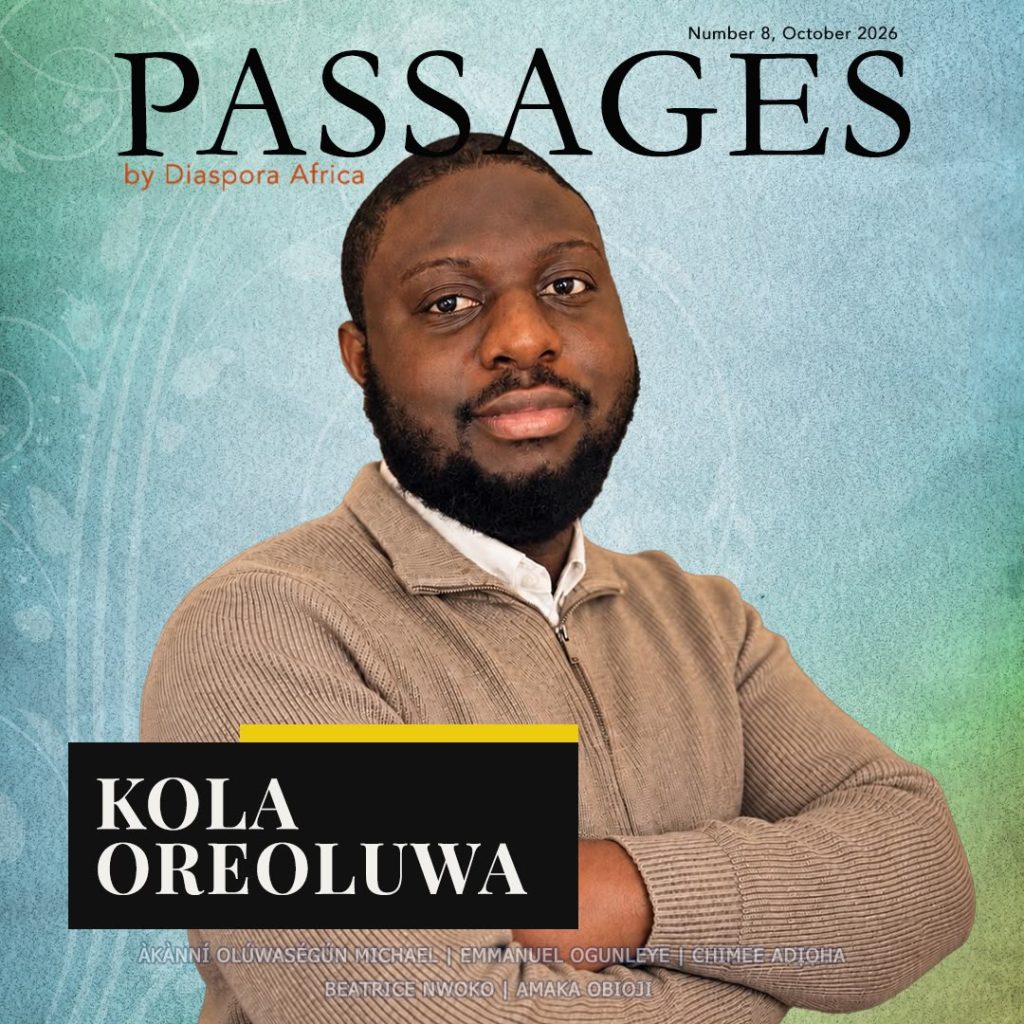
Kola Oreoluwa encountered that distance at a family function after moving to the UK. His grandmother called to speak with his cousins and spoke to them in Yoruba. They could respond with only a few words, making it hard to sustain a proper conversation. The experience made Oreoluwa think differently about what is lost when an African language disappears from everyday family life. It is not only vocabulary that becomes unfamiliar. Stories, jokes, proverbs, family histories, and the subtle ways generations understand one another can also become harder to pass down.
That realisation became the starting point for TalkSharp and Oreoluwa’s interest in using technology to help people learn African languages while understanding the cultures in which those languages live. For him, learning a language cannot be separated from learning how people greet their elders, interact at family gatherings, understand proverbs or participate in cultural traditions.
“That experience made me realise there was a real problem: Children were growing up in the diaspora who could identify with being African but could not communicate effectively in the language of their parents or grandparents,” he said.
The loss of an African language is not simply about whether a child knows enough Yoruba, Igbo or another African language to construct a sentence. For him, language is one of the things that allows a family to carry itself from one generation to the next. A child may still know where their family comes from, identify as African and recognise the customs and traditions associated with home, but language can determine how deeply they are able to participate in that inheritance.
“I realised that language loss is not just about forgetting words. It creates an intergenerational gap.”
That gap, he says, can affect the way knowledge moves through a family. Grandparents carry stories about their families, communities and experiences. They carry proverbs and expressions whose meanings are often rooted in particular cultural contexts. They also carry ways of understanding one another that may not be easily reproduced when the language itself is no longer shared.
“When a grandmother cannot communicate with her grandchildren because they do not speak the same language, something deeper is lost. The stories, jokes, proverbs, family histories and ways of understanding one another also become harder to pass down.”
This is where Oreoluwa’s understanding of language moves beyond the classroom. He does not see African-language learning as a matter of memorising vocabulary and grammar and stopping there. Language, in his view, is inseparable from the culture that gives those words meaning.
“That is what we are trying to address with TalkSharp. It is about preserving the language, but also preserving the connection that comes with that language.
If someone learns Yoruba but does not understand how to greet an elder, how to behave at a family gathering or why a particular proverb carries a particular meaning, Oreoluwa believes something important is missing from that learning. “Because language does not exist in isolation from culture.”
For this reason, the learning experience he describes includes greetings, family gatherings, weddings, interactions with elders, proverbs, idioms and folk tales. These are not simply additional cultural decorations around a language course. They are part of the language itself, because they reveal how people are expected to behave and communicate within their communities.
“For example, in Yoruba culture, the way you greet an elder can depend on the situation. You may bow or prostrate, and there are also expectations about how younger people should behave around older members of the family. If you only learn the words without understanding the meaning behind these practices, then you are only learning part of the language and culture.”
“We want learners to understand why those things matter rather than simply memorising vocabulary.”
AI plays a transformative role in helping learners master African languages by offering interactive cultural simulations, personalised learning pathways, and real-time pronunciation support. Instead of relying solely on rote memorisation, artificial intelligence can simulate authentic real-world scenarios such as navigating social hierarchies, understanding humour, or respecting traditional etiquette, giving learners a safe, immersive space to practice culturally nuanced conversations.
“That is one of the most exciting capabilities of what we are building,” Oreoluwa explains.
By analysing individual learner performance, AI systems tailor guidance to address specific weaknesses, adjusting the depth of feedback based on a person’s progress. TalkSharp is actively leveraging these intelligent systems to build dynamic datasets around the rich intersection of language and living culture.
“AI can bridge the gap by modelling real-life interactions,” he says. “While attending a festival in person has unique social expectations, interactive AI simulations offer an accessible way to prepare learners for real-world participation.”
Through these tailored simulations, a user can practice role-playing as a groom at a Yoruba wedding, engaging with virtual relatives while receiving immediate, context-aware advice on both language choice and cultural expectations.
That work also extends to pronunciation, particularly where tone can change a word’s meaning. SAUTI, TalkSharp’s AI (in development), is being built around these to improve the learning experience for users.
“SAUTI comes from the Swahili word meaning voice.”
In Yoruba, a change in tone can change a word’s meaning. For someone learning the language from outside the environment in which it is naturally spoken, pronunciation therefore becomes more than an exercise in sounding correct. It can determine whether a word communicates what the speaker intends.
SAUTI is being built using voice data from native speakers. The idea is for the system to listen to a learner, identify tonal or pronunciation problems, and help them correct those mistakes. After learning through a structured lesson, the learner can then practise conversationally and try again when the pronunciation or tone is not right.
But even here, Oreoluwa recognises another reality about African languages: there is rarely a single voice that can represent an entire language. “African languages have different accents, dialects and regional variations.”
“The more native speakers and linguistic data we have, the better we can represent that diversity,” he said. “We do not want to create a system that says there is only one way to speak a language when, in reality, languages evolve and vary between communities.”
For Oreoluwa, that makes collaboration central to the development of language technology.
“We need people from different communities contributing their voices and their understanding of the language,” he said. “That is how you build something that reflects the language as people actually use it.”
For many in the diaspora, surviving outside the continent can trigger a quiet struggle with identity and belonging. Oreoluwa notes that this distance becomes painfully clear when individuals return home, only to encounter relatives with whom they cannot communicate in the local dialect. Listening to Afrobeats or watching African cinema can foster pride, but without native fluency, a vital link remains broken.
“Language is the bridge that transforms surface identity into true belonging,” he explains. “You can embrace African culture from afar, but when you return to Nigeria and cannot respond to your grandmother in Yoruba, an undeniable gap persists.”
Rather than signalling a lack of pride, this communication barrier often limits how deeply one can participate in family conversations, shared laughter, and lived traditions. Language unlocks intimate cultural connection, turning passive observation into meaningful participation.
“Without the language, you may feel deeply African, yet find yourself excluded from the heart of everyday conversations and heritage,” Oreoluwa adds.
This disconnect can feel especially poignant when diaspora members face light-hearted teasing back home over their accent or hesitation. Fluency thus becomes a powerful pathway to acceptance, breaking down barriers and fostering genuine social warmth.
“When you speak the language, the tone changes immediately. It transforms mild teasing into instant camaraderie and warmth—it is your ultimate key to belonging,” he says. Oreoluwa’s journey learning Hausa while studying in northern Nigeria reinforced how shared language influences relationships far beyond the family setting, extending directly into community trust and economic access.
“Learning Hausa changed how people interacted with me. I noticed that when I could communicate with the locals in Hausa, I received warmer treatment. Even when negotiating in the market, there were situations where knowing Hausa helped me get better prices,” he said.
That experience revealed that language is far more than a functional tool for exchanging words; it is a catalyst for genuine cultural connection, social integration, and real-world economic opportunity. “It proved to me that language goes well beyond simple communication,” Oreoluwa emphasises. “It is a key that unlocks trust, community, and economic access.”
He believes that access can be particularly valuable for businesses, entrepreneurs and people travelling across the continent, where the ability to communicate directly with local communities can influence the relationships they build. “For businesses, entrepreneurs and even people travelling within Africa, being able to communicate directly with people can build trust in ways that relying entirely on translation may not,” he said.
Oreoluwa also sees a potential economic value in African-language proficiency as the continent becomes more interconnected.
He argued that African languages should not be treated as having less value than internationally dominant languages, particularly when people are trying to build relationships or operate in specific African markets.
“African languages have the same inherent value as German, Mandarin or any other language,” he said. “If you want to do business in southeastern Nigeria, for example, understanding Igbo can be useful. If you are operating in Kenya, learning Kiswahili can help you build relationships.”
“As Africa becomes more economically influential, I think demand for people who understand African languages will also increase,” Oreoluwa added. “We are already seeing international organisations and technology companies becoming more interested in African-language expertise.”
Yet using technology for language preservation requires thoughtful design to ensure it enhances real-world connection rather than replacing it. Oreoluwa believes language learning platforms should feel natural, intuitive, and engaging, guiding learners smoothly without making them overly reliant on software for basic interaction.
“That balance is essential,” he says. “Technology must serve usability, removing friction so that practising a language feels like second nature.” At TalkSharp, the user experience is designed around immersive, context-rich scenarios that make lessons feel conversational rather than mechanical.
“Our goal isn’t to isolate learners behind a screen but to build their confidence so they can step directly into human conversations,” he explains. “Technology should be an engaging bridge to authentic cultural participation.” This user-centric approach is particularly crucial when addressing the thousands of African languages that lack digital learning resources.
While TalkSharp’s current language offering is Yoruba and Igbo, the platform’s underlying technology is designed to scale across more African languages. Making languages accessible in a simple, friendly interface is one of the team’s most ambitious long-term goals.
“Oreoluwa aims to partner with preservation organisations, using digital technology to archive endangered African languages spoken by smaller communities or only a few families.
“Technology can document vocabulary and stories, but usability is what inspires people to actually practice and speak,” he says.
By making language practice seamless and intuitive, TalkSharp aims to empower families to pass their linguistic heritage to the next generation naturally. This emphasis on usability doesn’t mean setting aside global languages like English. Instead, it creates an inviting space for learners to comfortably navigate both worlds.
“English remains important, but learning an African language shouldn’t feel like a chore,” he says. “A child should be able to navigate school in English and effortlessly switch to Yoruba when talking with their grandparents.”
For diaspora youth, smart technology offers a warm, accessible entryway into their roots without the anxiety of feeling judged. “With an engaging, supportive learning tool, mastering a language opens doors to family warmth, humour, and connection that translation simply can’t match,” he adds.
Writer: Àkànní Olúwaségún Michael
Editors: Beatrice Nwoko, Amaka Obioji
Image: Diaspora Africa