

For many displaced young people in Northeastern Nigeria, life has been shaped by conflict, uncertainty, and loss. Years of insurgency linked to the Boko Haram crisis disrupted education, separated families, and forced millions from their homes across Borno State and neighbouring communities. In many displacement camps and temporary settlements, young people have grown up with limited access not only to education and recreation, but also to spaces where they can freely express themselves and share their experiences, with many growing up in a world already defined by violence and instability, knowing no life beyond the realities of conflict.
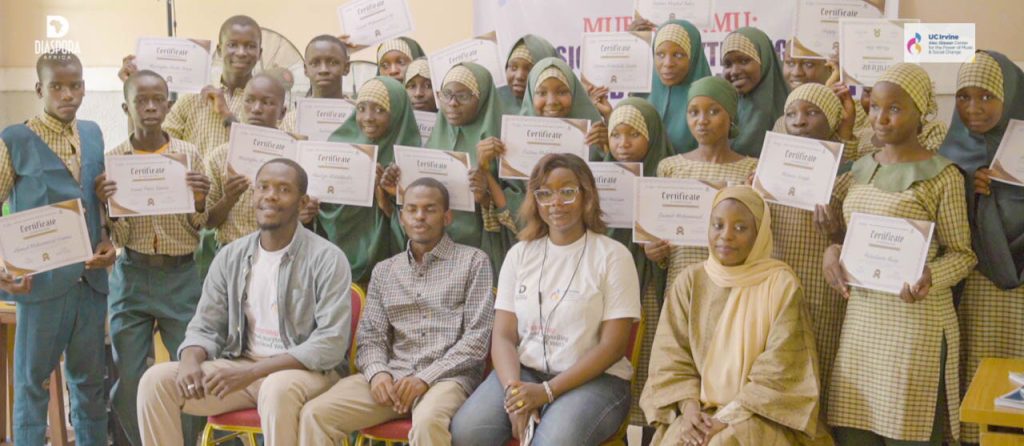
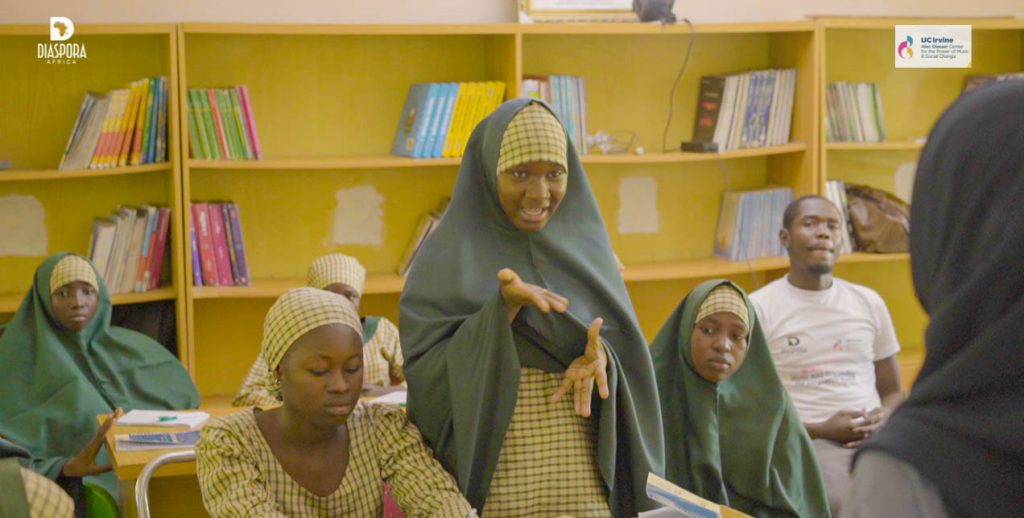
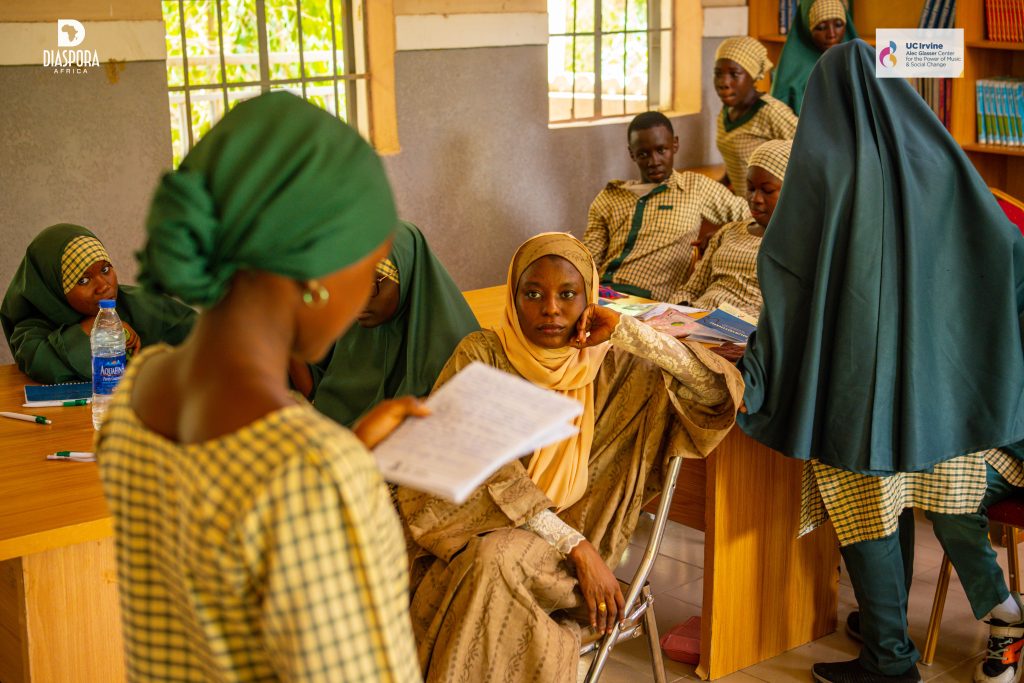
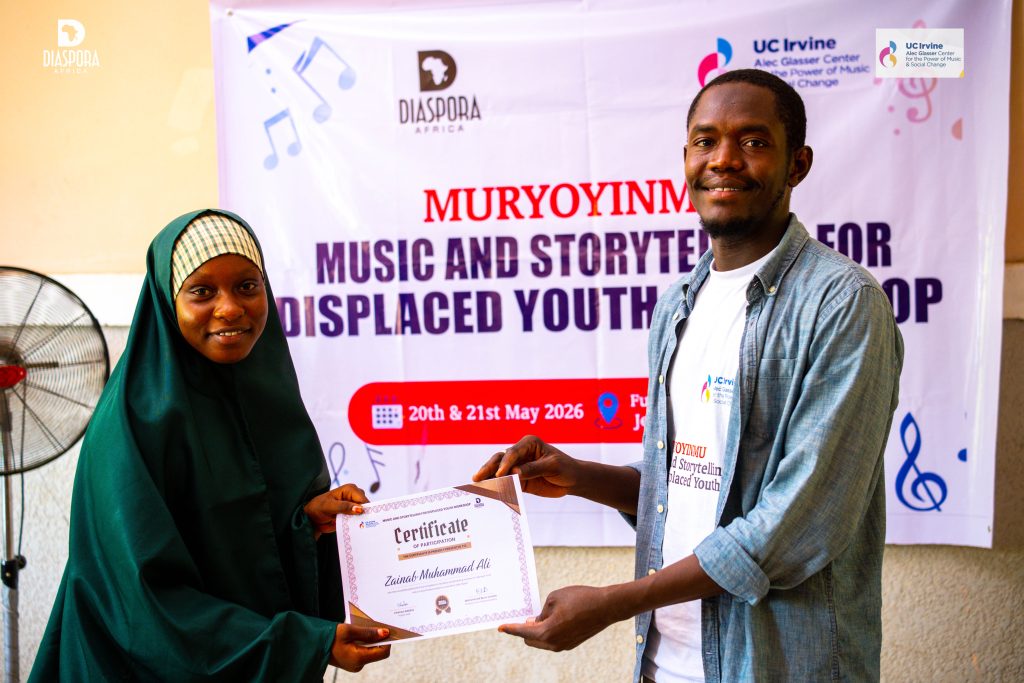
It was against this backdrop that the Muryoyinmu: Music and Storytelling Workshop for Displaced Youth was organised on 20 and 21 May at Future Prowess Academy in Maiduguri, Borno State, with support from the UC Irvine Alec Glasser Centre for the Power of Music and Social and in collaboration with Diaspora Africa.
The workshop aimed to provide displaced youth with a safe and creative platform to express themselves through music and storytelling, while countering the norm of displaced young people often being discussed in humanitarian reports, media coverage, and policy conversations without being allowed to tell their own stories in their own voices.
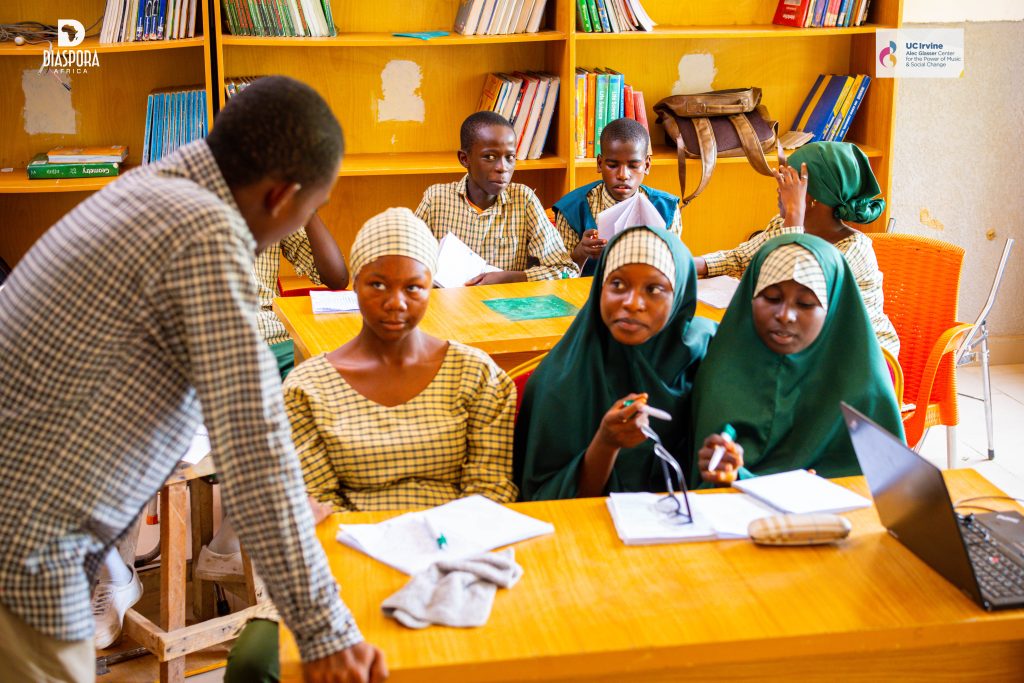
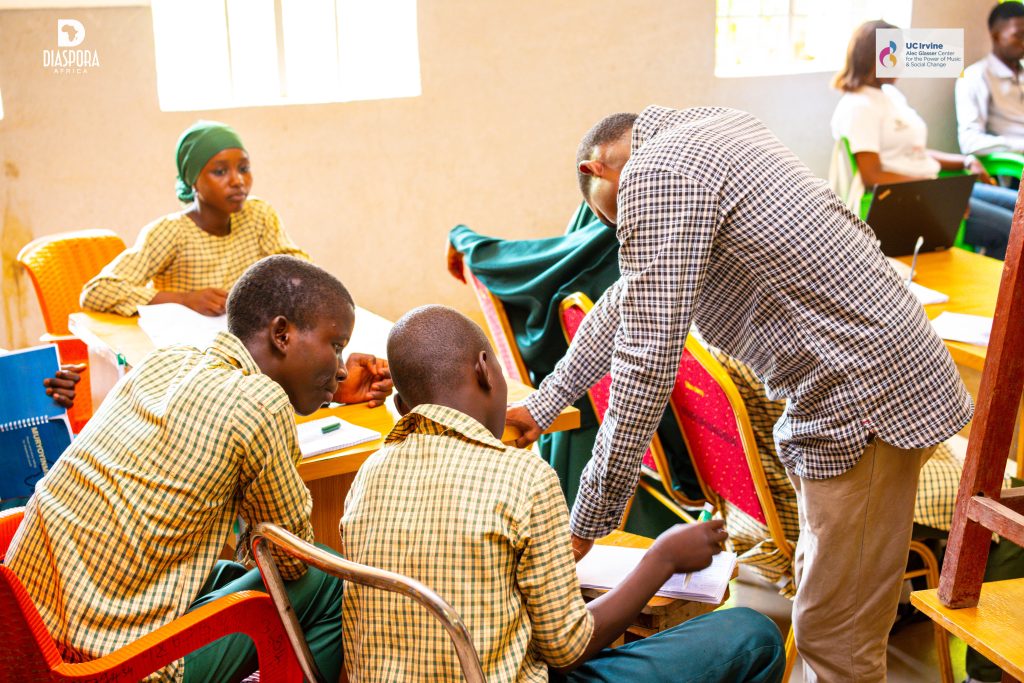
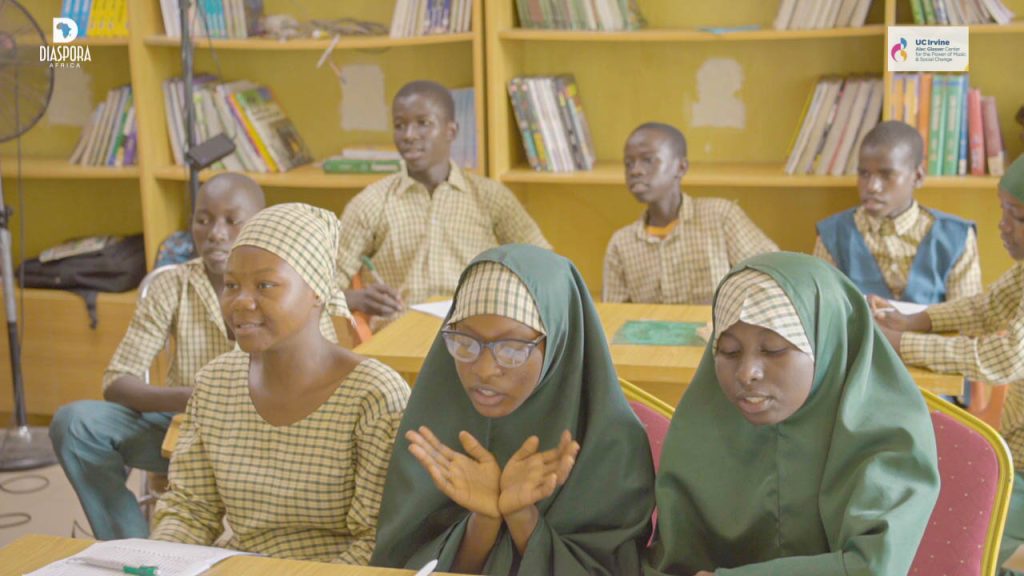
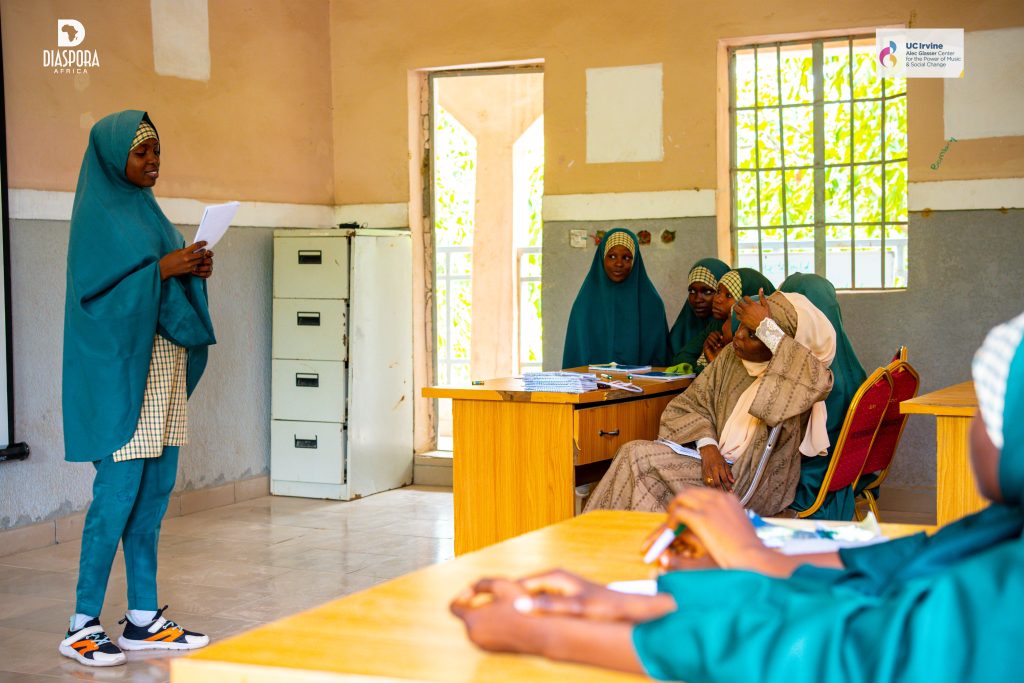
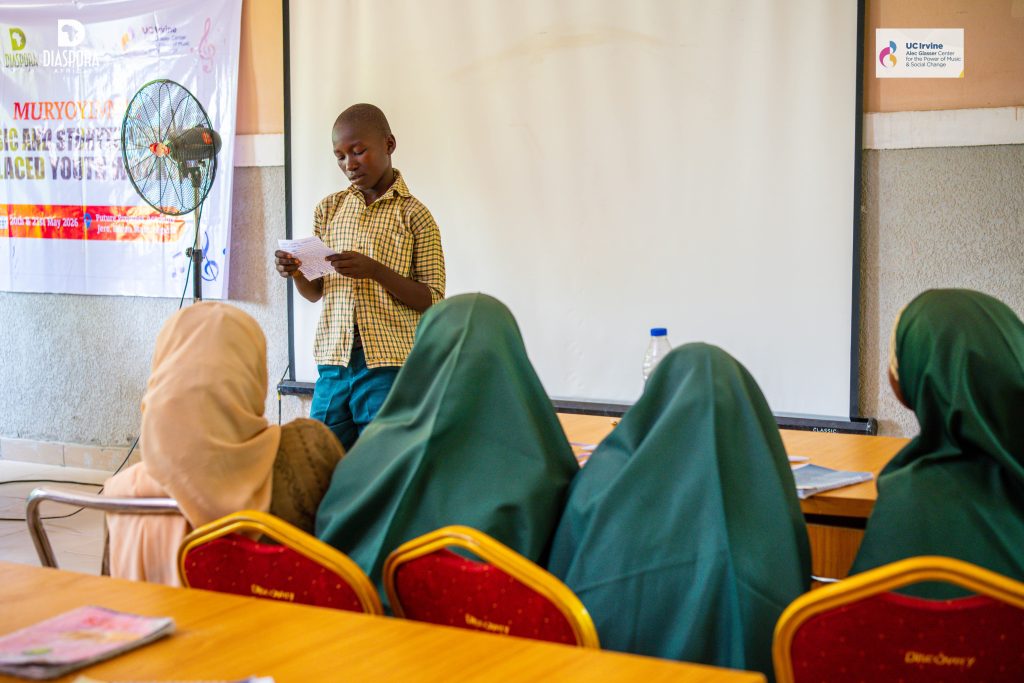
The programme brought together music, storytelling, mentorship, and collaborative learning to help participants reflect on their experiences, hopes, and identities. Through interactive sessions, students explored themes such as resilience, migration, displacement, identity, and social justice while learning how creative expression can become a powerful form of communication and community participation.
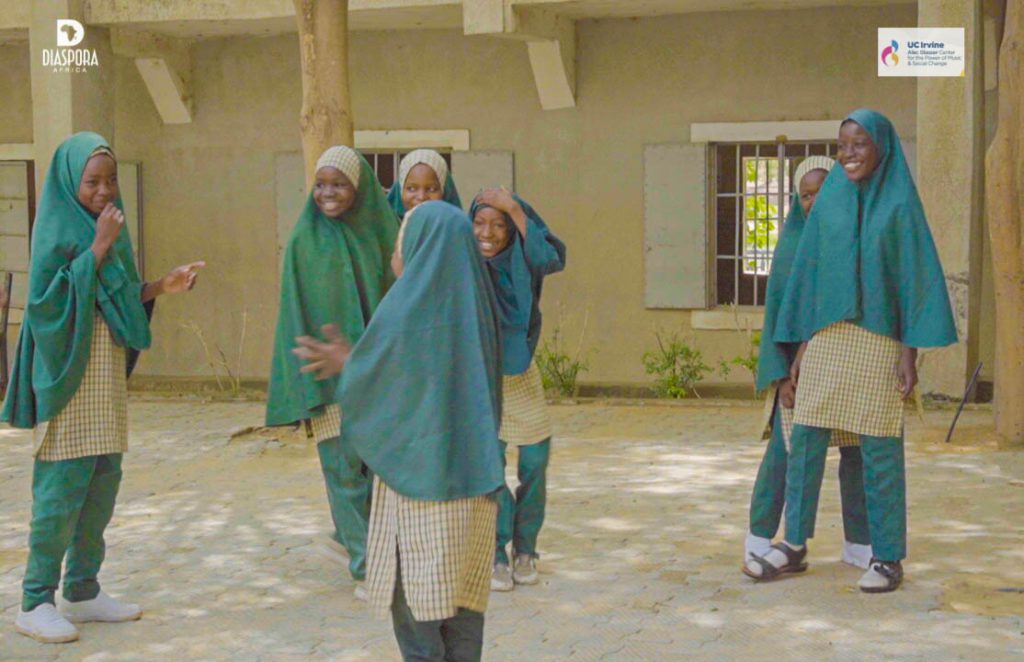
A total of 20 displaced students between the ages of 12 and 18 participated in the training sessions. During the workshop, participants learned the basics of storytelling, songwriting, and performance while working collectively with their peers. Facilitators encouraged students to create original stories, songs, and creative pieces inspired by their personal experiences and observations.
Organisers described the workshop as more than an artistic programme. They viewed music and storytelling as tools capable of building confidence, strengthening communication skills, and creating a sense of belonging among displaced youth. In communities affected by violence and displacement, creative expression can also provide emotional release and help young people process difficult experiences without forcing them into direct trauma discussions.
Hassana Danyarwa, a storyteller and facilitator at the workshop, explained that storytelling allows displaced youth to have their voices heard while helping them build confidence and improve their mental wellbeing. According to her, storytelling also reminds participants that their experiences matter and can contribute to healing.
Speaking about the participants, Danyarwa noted that although the workshop lasted only a short time, she observed strong enthusiasm among the students. She said participants were eager to learn, open to sharing their experiences, and willing to embrace new ideas and ways of thinking. She described their curiosity as an important quality that could shape their future growth and transformation.
The initiative also addressed a deeper issue surrounding representation and narrative ownership. Displaced people are frequently portrayed through images of suffering and dependency, yet their perspectives, talents, and ideas are often overlooked. By encouraging students to tell their own stories, the workshop sought to challenge stereotypes and shift public perception of displaced communities.
Rather than presenting displaced youth only as victims of conflict, the programme highlighted them as creators, artists, storytellers, and active participants capable of shaping conversations about their lives and futures.
Yahuza Bawage, project associate, explained that many displaced young people in Northeastern Nigeria carry different forms of trauma caused by conflict and displacement. Some lost family members, while others were forced to leave the communities where they grew up and begin life again under difficult conditions. According to him, music and storytelling provide an important pathway for healing because they allow young people to step away from traumatic experiences while reclaiming control over how their stories are told.
Bawage warned that when outsiders alone control narratives about displaced communities, those stories can sometimes retraumatize the people involved. He said the workshop was important because it allowed participants to express their own realities in their own words. He recalled how one participant from Gwoza shared that he previously listened to music as a way to escape the painful experience of displacement, but through the workshop had learned how to create his own music inspired by his experiences. Bawage described that moment as one of the programme’s biggest achievements.
He further expressed hope that participants would continue sharing the knowledge gained during the training within their communities. According to him, some students had already begun writing lyrics connecting political corruption with the challenges faced by displaced people, demonstrating an understanding of how music can be used as a tool for advocacy and social awareness.
The workshop emphasised voluntary participation and supportive creative activities that allowed students to express themselves at their own comfort levels. The workshop focused on creativity, collaboration, and self-expression rather than forcing participants to revisit painful memories.
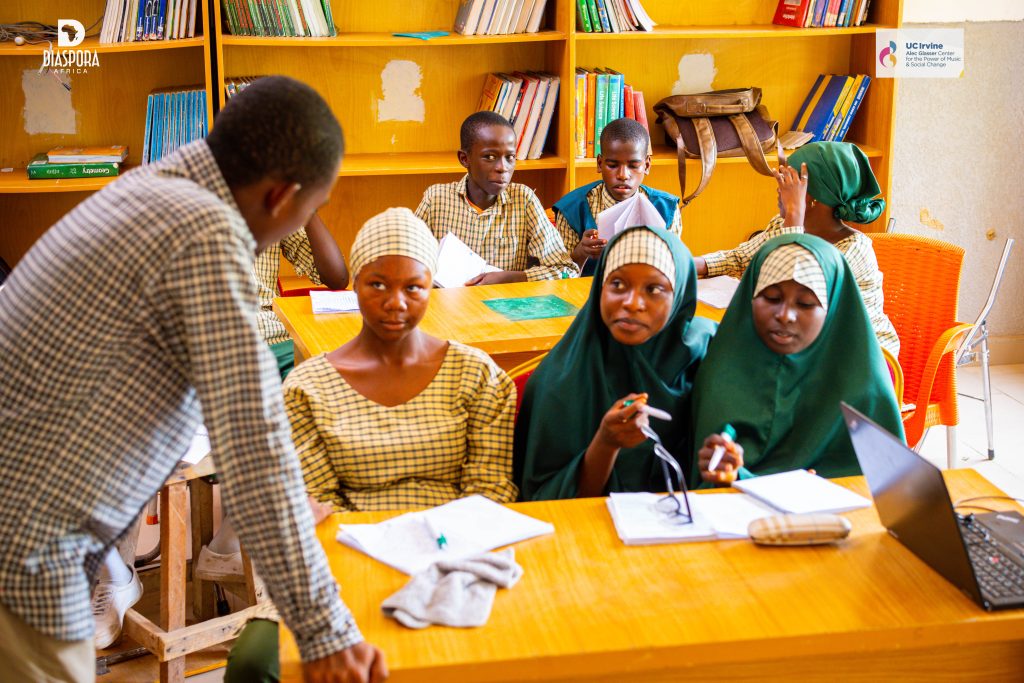
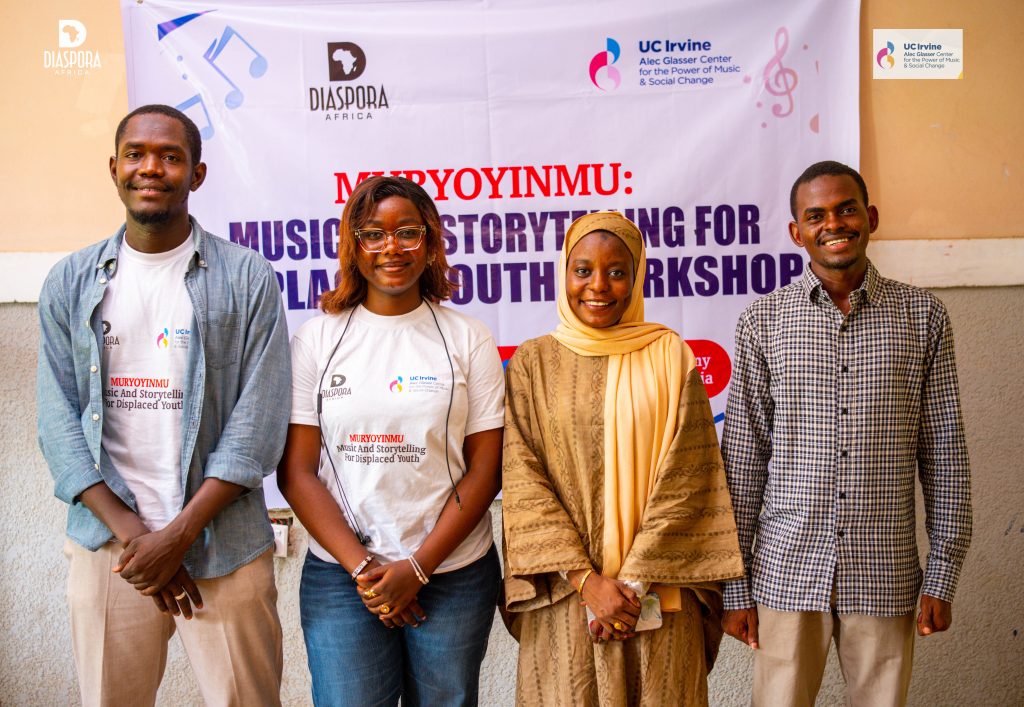
Music instructor Gift Akonti described music as an emotional form of expression capable of communicating feelings that are often difficult to explain through ordinary conversation. She explained that displaced young people can use rhythm and songwriting to express emotions and experiences that may otherwise remain hidden.
Akonti said many participants were initially shy and hesitant to contribute during sessions. However, as the workshop progressed and participants began to see music as a way of speaking out, they became more confident, curious, and willing to engage. She recalled that some students voluntarily wrote songs during the training, with lyrics that carried deeply personal meanings connected to their lives and experiences.
One of the participants, 16-year-old Amina Ghide, said the workshop allowed her to express thoughts and experiences she had previously struggled to share openly. According to her, learning storytelling and music alongside other displaced young people created a sense of confidence and connection. “Before this workshop, I had never thought I could express my experiences through music. I only associated music with dancing,” she said. Amina added that the sessions helped her realise that her experiences and ideas could be meaningful to others, while also encouraging her to speak more freely through creative expression.
Akonti expressed hope that participants would continue using music as a source of confidence and self-expression in their daily lives. She also hoped some students would develop a lasting passion for music and recognise its power to support emotional wellbeing and communication.
The project manager, Chimee Adịọha, explained that the workshop was inspired by the recognition that displaced youth are often represented only through statistics, humanitarian narratives, and crisis reporting, while their own creativity and lived experiences remain overlooked. According to the project manager, the workshop was intentionally designed as a participatory space where young people could express themselves through music and storytelling while reflecting on their identities, aspirations, and experiences.
Chimee also described music and storytelling as accessible and deeply human forms of expression that help displaced young people connect with others, build confidence, and communicate experiences without relying on formal or technical language. Music encourages collaboration and collective participation, while storytelling helps young people make sense of their journeys and imagine hopeful futures. Together, the project manager said, these creative tools help foster belonging, resilience, visibility, and stronger youth voices within communities affected by displacement.
For the students who participated, the workshop represented more than a training programme. It became an opportunity to be heard, to connect with others through creativity, and to reclaim ownership of stories that are too often told by others.